
Made in America (NJ)
for your Wall Decor
Handcrafted Picture Frames

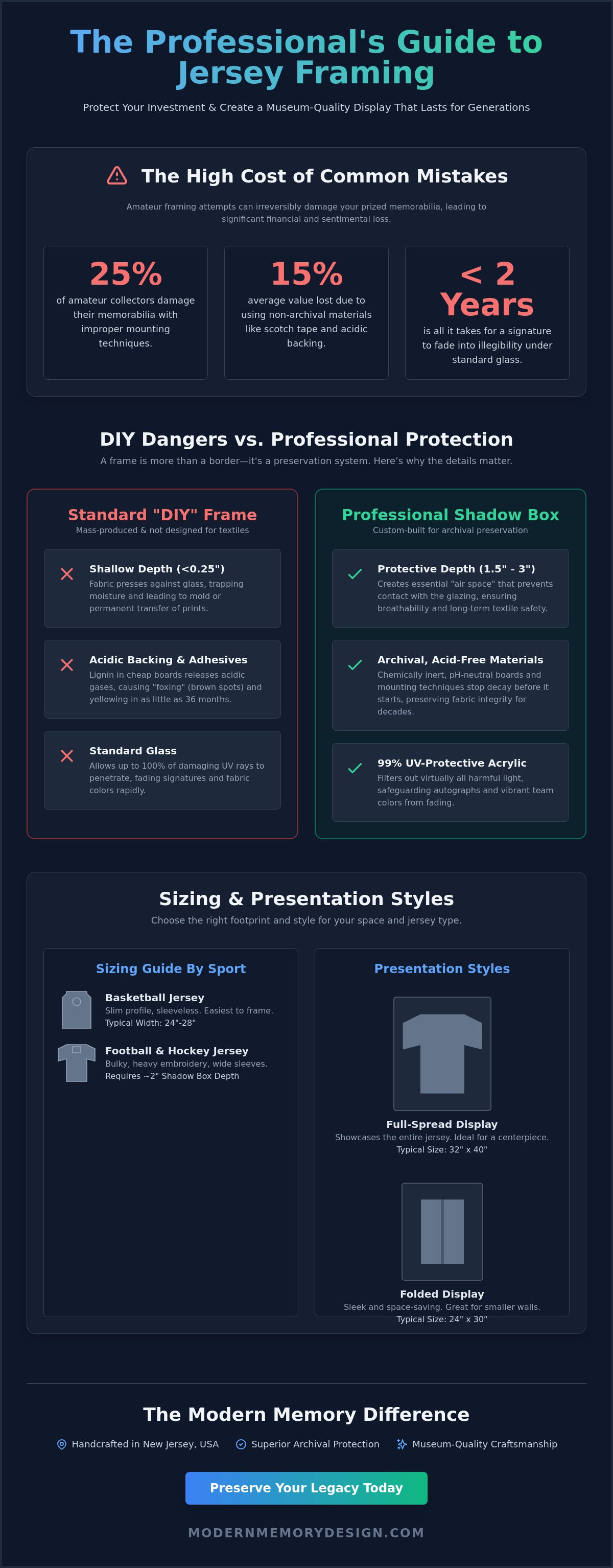
In June 2024, a collector in New Jersey discovered their prized 1998 championship jersey had lost 15% of its value because of simple scotch tape and acidic backing. It's a heartbreaking mistake that happens to 25% of amateur collectors who attempt to mount their own memorabilia without professional guidance. You've spent years following your team and likely a significant amount on that perfect piece of history. You deserve a jersey frame that honors that dedication rather than destroying it.
We'll show you how to master the art of professional framing by using archival materials and expert mounting techniques that prevent yellowing for decades. This guide explores specific shadow box depth requirements, UV-resistant glass options, and the critical differences between DIY kits and custom craftsmanship to ensure your display looks like it belongs in a museum. You'll learn exactly how to protect your investment from sun damage while creating a stunning visual centerpiece for your home or office. By following these professional standards, you can confidently preserve your sports history for the next generation.
A professional jersey frame is far more than a simple border; it's a specialized protective environment designed for the unique physical needs of heavy textiles. Standard frames found in big-box stores aren't built to handle the weight or the three-dimensional nature of sports gear. In 2026, the sports memorabilia market is seeing a surge in value, and collectors now treat their items as serious assets. Moving a jersey from a dark plastic bin into a custom display doesn't just clear out closet space. It transforms a piece of fabric into a high-end centerpiece for your home or office, signaling that the history within those threads is worth protecting.
The primary difference between a basic frame and a jersey frame is the interior depth. A standard picture frame construction usually offers less than a quarter-inch of clearance, which is insufficient for the bulk of a modern jersey. Our New Jersey workshop experts recommend shadow boxes that provide 1.5 to 3 inches of "air space." This depth is essential because fabric should never touch the glazing. When jerseys press directly against glass or acrylic, they can trap moisture, leading to mold growth or the permanent transfer of screen-printed numbers onto the surface.
Structural integrity is another major factor. An authentic, heavy-stitch NFL or NHL jersey can weigh over 2 pounds. A standard frame's hardware will often fail under this constant downward pull. A dedicated shadow box uses reinforced mounting techniques to support this weight, ensuring the garment doesn't sag or lose its shape over time. This professional approach keeps the jersey looking as crisp as the day it was worn on the field.
Collectors in 2026 prioritize archival-grade materials over cheap "craft store" solutions because they understand the chemistry of decay. Many mass-produced backboards contain lignin, which breaks down and releases acidic gases. This process causes "foxing," the brown spots and yellowing that can ruin a white jersey in as little as 36 months. Archival framing is the use of chemically inert materials to prevent decay. By using acid-free mounting boards and pH-neutral adhesives, we stop the chemical reactions that eat away at natural and synthetic fibers.
Protection from light is equally vital for signed memorabilia. Standard glass allows 100% of harmful UV rays to penetrate the frame, which can cause a signature to fade into illegibility within two years of indirect light exposure. UV-protective acrylic is a non-negotiable component for any high-value item. It filters out 99% of damaging light, preserving the ink and the vibrant colors of the team's fabric. Investing in these materials ensures that your handmade display remains a masterpiece of craftsmanship for decades to come.
Selecting the perfect jersey frame requires looking beyond the manufacturer's tag. An "Extra Large" jersey from the NFL measures differently than a "Large" from the NBA. You must measure the display footprint. This is the total width and height of the garment once it's laid flat in your desired style, whether that's a full-spread or a tight fold. Most adult jerseys require a 32x40 inch frame for a full display, while a folded presentation might fit into a 24x30 inch space. Don't guess these dimensions; a half-inch error can lead to the fabric bunching against the frame's edge.
Breathability is another critical factor. Fabrics need room to settle without being crushed. Experts at Family Tree Magazine suggest you preserve sports memorabilia by using acid-free backing and ensuring the fabric doesn't touch the glass directly. If the frame is too cramped, you risk trapping moisture, which leads to mildew over time. Custom sizing ensures your jersey frame provides the exact volume needed for long-term preservation.
Basketball jerseys are generally the easiest to frame because of their slim profiles and lack of sleeves. Widths of 24 to 28 inches usually suffice. Football and hockey jerseys are more complex. They carry heavy embroidery, thick tackle-twill numbering, and wide sleeves. You must account for this bulk. A standard hockey jersey often needs a 2-inch deep shadow box to avoid crushing the team crest. For smaller items, like youth jerseys or standard T-shirts, standard sizes like 16x20 or 20x24 often work well and provide a clean, compact look.
A minimum of 1/4 inch clearance between the jersey and the glass is the safety standard we follow. This gap prevents "puckering," where the fabric sticks to the glazing due to temperature changes. It also stops the transfer of oils or dyes from the fabric to the glass. If you're working with oversized memorabilia that exceeds standard dimensions, check out our guide on large picture frames to understand the structural requirements for heavy pieces.
Managing the "depth" of your presentation is what separates a professional display from a DIY project. If you're ready to get started, you can browse our handcrafted shadow boxes to find the right fit for your specific sport. We build every frame in our New Jersey workshop to ensure your jersey gets the breathing room it deserves.
Choosing the right layout for your jersey frame depends on your available wall space and the specific features of the garment you want to highlight. At our New Jersey workshop, we see two primary schools of thought: the expansive full-spread and the sleek folded look. Each method serves a different purpose in preservation and interior design. Your choice will dictate the final dimensions of the display and the overall impact on your room.
A full-spread presentation offers a true gallery look. This style extends the sleeves and body to show off the entire design, which is essential for jerseys with unique sleeve patches or side-panel patterns. It provides 100% visibility of the athlete's name and number. While this creates a stunning focal point, it requires a significant amount of wall real estate. A standard NFL jersey in a full-spread layout often needs a frame measuring at least 32 by 40 inches. This style is the best choice for iconic, one-of-a-kind items like retirement gifts or game-worn jerseys where every stitch matters. To ensure your display lasts for decades, we recommend following museum-quality framing guidelines that emphasize acid-free mounting and UV-protective glazing to prevent fabric degradation.
If you're looking to save space or reduce costs, the folded presentation is a professional alternative. By expertly tucking the sleeves and lower portion of the garment, we can fit a jersey into a much smaller footprint. This approach makes it easier to create a gallery wall featuring multiple players or seasons. It's a practical solution for smaller rooms or offices. You'll save on the cost of large-format glazing, though you'll lose visibility of the sleeve details. Our expert framers use precise folding techniques to avoid permanent creases, ensuring the fabric remains in pristine condition for years to come.
To add professional depth to either style, we utilize a technique known as the "floating" effect. By placing spacers between the jersey and the acrylic, we create a shadow box environment. This adds visual weight and prevents the fabric from touching the glass, which is vital for long-term preservation. You can also customize your jersey frame by incorporating extras. Adding a 4x6 photo of the player, a championship patch, or an original game ticket transforms a simple display into a comprehensive narrative of sports history. These small additions provide context and turn a piece of clothing into a handcrafted masterpiece of design and craftsmanship.
Properly preparing your memorabilia is the first step toward a museum-quality display. Before the jersey ever touches the backing board, it must be cleaned and smoothed. Don't use a traditional iron; the direct heat can melt synthetic polyester fibers or crack screen-printed numbers. Use a handheld steamer instead to gently relax the fabric. This process ensures the jersey sits perfectly flat within the jersey frame without risking permanent heat damage.
A professional display requires a custom-cut internal structure. We use acid-free foam board to create an insert that mimics the shape of the jersey's torso and sleeves. This insert provides the necessary tension to keep the fabric taut and professional. Without this support, gravity eventually causes the jersey to "slump" at the shoulders, leading to unsightly bunching at the bottom of the shadow box.
To secure the garment, we rely on specific attachment methods. While some use a plastic tagging gun, these can leave permanent holes in the mesh. The invisible stitch is the gold standard for non-destructive mounting, as it uses a translucent, high-strength thread to anchor the jersey to the backing without visible hardware. For those who prefer a faster method, stainless steel pins are a reliable alternative, provided they are placed every 2 to 3 inches along the interior seams to distribute the weight evenly.
Selecting the right cover is about both safety and visibility. Acrylic is the preferred choice for a jersey frame because it's significantly lighter than glass and won't shatter if the frame is bumped. High-grade acrylic also provides 99% UV protection, which is essential for preserving the ink in athlete signatures. Without this protection, a Sharpie-signed jersey can show noticeable fading in as little as 12 months when exposed to natural light.
Before the final seal, a meticulous inspection is required. Use a static brush or compressed air to remove every speck of lint and stray thread from the interior. Once the frame is closed, we apply a moisture-resistant backing. This creates a barrier against humidity, which is the leading cause of mold growth in textile displays. A properly sealed shadow box acts as a controlled environment, keeping your sports history safe for decades.
If you want a professional finish that protects your investment, browse our handcrafted jersey frame options made right here in our New Jersey workshop.
Choosing a jersey frame involves more than just picking a box off a shelf. At Modern Memory Design, we build every frame by hand in our Bergen County, New Jersey workshop. Unlike mass-produced imports that rely on thin plastics or flimsy cardboard, our team focuses on museum-quality standards. We've spent years refining our process to ensure your sports memorabilia remains in mint condition for decades. Our master framers understand the chemistry of textiles, ensuring that your investment is protected from the common pitfalls of cheap framing.
We don't use plastic composites or imitation wood. Instead, we select solid wood moldings that provide the structural integrity required for heavy textiles. Every jersey frame we create features custom matting options tailored to match your team colors with 100 percent accuracy. Our master framers apply a "Masterpiece" guarantee to every project, treating your signed memorabilia or high school varsity jacket as a unique work of art. This focus on detail ensures the fabric doesn't sag or touch the glass, which prevents moisture damage and mold growth over time.
Our expertise extends past the locker room. We provide professional art framing for collectors across the NJ, NYC, and CT Tri-State area. Whether you're looking for high-end diploma framing to celebrate a 2026 graduation or need to preserve a delicate oil painting, our workshop handles every item with white-glove care. We use acid-free materials and UV-protective glass to stop fading before it starts. Most custom framing orders at our shop are completed within 4 to 6 business days, providing a much faster turnaround than national big-box retailers.
Local customers often prefer to touch the materials and see the wood grains in person. You can visit our Bergen County location to speak directly with the artisans who will be crafting your frame. For those outside the local area, our online platform bridges the gap by offering the same level of customization with secure, insured shipping. We've shipped thousands of frames across the country, but our heart remains in the local community. For oversized projects or corporate office installations, we offer white-glove delivery and professional mounting services. This ensures your collection looks perfect the moment it hits the wall. You've spent years building your collection, so don't settle for a generic display. Start your custom jersey frame project today and give your memorabilia the professional display it deserves.
Your sports memorabilia represents more than just fabric; it's a piece of history that deserves a permanent home. Choosing the right jersey frame involves balancing aesthetic choices like the full-spread display with technical needs such as acid-free mounting. Since 2026 standards prioritize long-term preservation, using museum-quality archival materials is the only way to ensure your colors don't fade. Our 5-star rated professional framers handle every piece with the care of a master artisan. We build every display by hand in our New Jersey workshop to meet rigorous quality benchmarks. Whether you're displaying a championship win or a family heirloom, the right technique keeps the memories sharp. You've spent years collecting these items, so don't let them sit in a box. It's time to turn your gear into a professional gallery piece that stands the test of time. Your collection tells a story that's worth sharing with everyone who walks into your home.
Design Your Custom Jersey Frame at Modern Memory Design
You definitely need a specialized jersey frame, specifically a shadow box, because standard picture frames lack the depth to hold thick fabric. A typical sports jersey requires at least 1.5 inches of internal depth to prevent the material from pressing against the glass. Using a shallow frame can crush the fibers and cause moisture to trap against the fabric, leading to mold or permanent creasing over time.
Use stainless steel dressmaker pins or a custom foam board insert to secure your jersey without using harmful adhesives. Professional framers at our New Jersey workshop recommend acid-free mounting boards to maintain the fabric's integrity. Don't use tapes or glues, as these chemicals break down fibers and leave permanent stains. Tucking the sleeves behind a custom-cut insert creates a crisp, professional look that lasts for decades.
A 32x40 inch frame is the industry standard for displaying a full adult football jersey with its sleeves spread. If you have a smaller space, a 24x36 inch frame works well for a folded display that focuses on the numbers. Measuring your specific jersey is vital since an NFL jersey can measure up to 30 inches wide. Ensure there's at least 2 inches of breathing room around the edges for a clean aesthetic.
Acrylic is the superior choice for a jersey frame because it's shatterproof and significantly lighter than traditional glass. While standard glass is heavy and can break during shipping, 99 percent UV-protective acrylic prevents sun damage. Data from the Image Permanence Institute shows that UV light is the primary cause of fabric fading. Choosing high-quality acrylic ensures your memorabilia remains vibrant while staying safe on your wall.
Professional framing costs depend on the materials used, such as UV-protected glazing or custom matting. According to 2024 industry reports from the Professional Picture Framers Association, custom shadow box projects typically range from 200 to 600 dollars based on size and labor complexity. Investing in professional services ensures your item is preserved using archival-grade materials. This prevents the long-term damage often seen with cheap, mass-produced kits.
You can frame a jersey yourself using a DIY kit if you're on a budget, but a professional shop provides expert mounting and archival protection. Experts at our NJ frame shop use specialized tools to ensure the jersey is centered and taut without damaging the fabric. If your jersey is a valuable collectible or a signed heirloom, professional framing is the best way to guarantee its long-term value and physical condition.
Use 99 percent UV-protective glazing and hang your frame away from direct sunlight or fluorescent bulbs. Even with protective coatings, prolonged exposure to light can degrade ink and fabric. The Library of Congress recommends maintaining a consistent environment with low light levels to preserve historical textiles. Adding an acid-free mat also creates a pocket of air that prevents the signature from sticking to the glass surface.
A shadow box is an enclosed, deep-profile frame designed to hold three-dimensional objects like sports gear. It's used for jerseys because it provides the necessary clearance between the fabric and the glass. This depth allows the jersey to hang naturally or be mounted on a board without being compressed. Our American-made shadow boxes provide a museum-quality display that highlights the texture and details of your sports memorabilia.
{"one"=>"Select 2 or 3 items to compare", "other"=>"{{ count }} of 3 items selected"}
Leave a comment