
Made in America (NJ)
for your Wall Decor
Handcrafted Picture Frames

Why does that stunning limited-edition print or classic movie poster always seem to require the exact same dimensions, yet finding a high-quality 18x24 frame feels like a gamble? You've likely dealt with the disappointment of a frame arriving shattered from a big-box retailer or realized too late that the cheap acrylic front has a wavy, distorted finish. It's a common struggle for anyone trying to elevate their home decor beyond a basic dorm-room aesthetic. At Modern Memory Design, we've seen thousands of customers in our New Jersey workshop who are tired of flimsy materials that don't do justice to their art.
You deserve a display that matches the craftsmanship of the piece inside. We'll help you discover why this specific size is the industry standard for 90% of professional posters and how to choose materials that won't yellow or degrade. You'll learn the difference between standard glass and UV-protective options, ensuring your memories stay preserved. This guide covers everything from selecting solid wood moldings made in the USA to understanding archival backing, giving you the confidence to create a gallery-quality look in any room of your home.
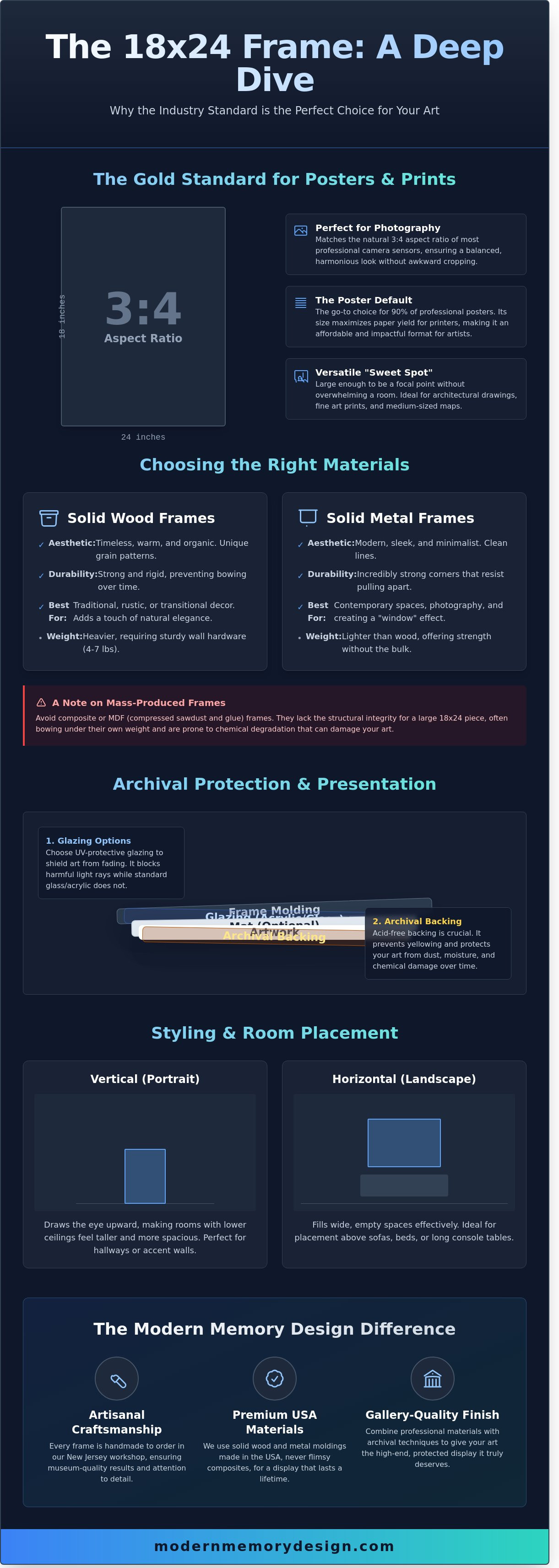
An 18x24 frame measures exactly 18 inches by 24 inches on the interior, where your artwork sits. This specific dimension creates a 3:4 aspect ratio. It's a favorite for photographers and digital artists because it matches the natural output of many professional camera sensors. This ratio provides a balanced, harmonious look that doesn't feel overly elongated or too boxy. In the framing industry, we consider this the "sweet spot" between small desk photos and massive wall murals.
When you compare this size to other picture frame sizes, you'll notice its unique presence in a home. It's large enough to serve as a focal point without requiring the massive wall clearance of a 24x36 poster. Beyond standard photography, this size is the go-to choice for architectural drawings, medium-sized maps, and fine art lithographs. A high-quality picture frame in this dimension offers the structural integrity needed to keep these larger paper types flat and protected from UV light and humidity.
The 18x24 format has deep roots in commercial printing. For decades, paper mills and offset printers have used this size to maximize paper yield and minimize waste. This efficiency makes it one of the most affordable large-format sizes for artists to produce. It offers the best visual impact for your money, providing a professional "gallery" feel at a fraction of the cost of custom-sized art. Many collectors eventually transition from flimsy, dorm-room plastic to professional poster frames made of solid wood or metal. Our 18x24 frame options provide the weight and craftsmanship your collection deserves, ensuring your posters look like curated art rather than temporary decor.
An 18x24 frame functions as a powerful anchor piece in smaller rooms. In a bathroom or a narrow hallway, a single frame of this size fills the space perfectly without making it feel cluttered. You can use this size to balance furniture by centering it over a console table or a small desk. Orientation changes the room's energy completely. A vertical (portrait) 18x24 frame draws the eyes upward, which helps small rooms feel taller. A horizontal (landscape) orientation works best for landscape photography or when you're trying to fill the width of a wall above a sofa. Whether you choose a modern sleek black finish or an ornate vintage style, this size remains our most versatile recommendation for both residential and corporate projects.
Selecting a frame molding transforms how viewers perceive your art. For an 18x24 frame, the material dictates both the style and the structural lifespan of the piece. Material choice isn't just about looks; it's about structural integrity. Unlike mass-produced composite or MDF materials that use compressed sawdust and glue, solid wood and aluminum provide the rigidity needed to prevent bowing. Expert framers often follow archival matting and framing specifications to ensure that the materials surrounding the art don't cause chemical degradation over time.
Color psychology plays a major role in how the frame interacts with your room. Black frames create a "window" effect, focusing the eye directly on the subject. White frames offer a clean, airy feel that works well in minimalist spaces. Natural wood tones bring organic warmth, while gold leaf adds a sense of luxury and history. Because an 18x24 frame covers a significant amount of wall space, these color choices will influence the room's overall mood.
Weight is a practical factor you can't ignore. A solid oak 18x24 frame can weigh between 4 and 7 pounds depending on the width of the molding and the type of glass used. You'll need to use sturdy hanging hardware, such as D-rings or a hanging wire rated for at least 15 pounds, to ensure the piece stays secure on your wall. Metal options are generally lighter but offer incredible strength, preventing the frame from pulling apart at the corners under its own weight.
Solid wood moldings offer a texture and grain that synthetic materials simply cannot replicate. Real wood is the preferred choice for traditional, rustic, or transitional decor. Popular finishes like Maple and Oak provide a clean, gallery-ready look, while Ornate Vintage styles add a "museum-quality" feel to the artwork. Wood is a durable material that develops a rich patina as it ages. Since we handcraft our frames in our New Jersey workshop, we ensure every joint is tight and every finish is smooth, providing a level of craftsmanship you won't find in big-box stores.
Metal frames offer a minimalist appeal with thin profiles that don't compete with the art. Aluminum is the industry standard here because of its high strength-to-weight ratio. This makes metal the ideal material for large oversized picture frames that need to remain rigid without becoming too heavy to hang. Color options in metal have evolved significantly. You aren't limited to just silver; you can choose matte black, brushed bronze, or even French gold leaf finishes that look indistinguishable from wood until you touch them.
If you're ready to upgrade your wall decor, you can shop our custom frame collections to find a material that fits your style perfectly.
Selecting an 18x24 frame is only half the battle. What goes inside the molding determines if your artwork survives the next decade or succumbs to environmental damage. Expert framers prioritize three main components: the glazing, the matting, and the mounting materials. These elements work together to block 99% of harmful UV rays and prevent moisture from warping your paper. When you invest in quality internals, you aren't just decorating; you're preserving a memory for the long term.
Standard glass is the traditional choice for smaller projects, but for an 18x24 frame, weight becomes a significant factor. Acrylic, often called Plexiglass, is 50% lighter than glass and virtually shatterproof. This makes it the safer choice for high-traffic areas or homes with children. If you're hanging art in a sunlit room, UV-protective glazing is essential. Without this protection, colors can fade by as much as 40% within a few years of exposure. Anti-reflective coatings are another premium option, reducing surface glare to less than 1% so your art remains visible from every angle in the room.
Adding a mat board serves two distinct purposes. It creates a professional gallery look and provides a necessary air gap between the artwork and the glazing. This gap prevents ink from sticking to the glass over time. A standard 2-inch mat board is the most popular choice for this size. When you add a 2-inch border to all sides of an 18x24 print, your final frame size increases to 22x28 inches. This larger footprint gives the art room to breathe and draws the viewer's eye toward the center. While 90% of galleries use off-white or cream mats to maintain focus, a black mat provides a bold, modern contrast for high-key photography.
True preservation requires acid-free materials. Standard cardboard backings often contain lignin, which turns paper yellow and brittle. Professional framing utilizes alpha-cellulose or 100% cotton rag mats that are pH-neutral. These archival components ensure your prints don't degrade, maintaining their original color and integrity for 75 to 100 years. At our workshop, we focus on these meticulous details to ensure every piece is a masterpiece of craftsmanship that stands the test of time.
An 18x24 frame serves as the perfect anchor for a room's visual narrative. Designers often refer to this size as the "hero" piece because it's large enough to command attention without overwhelming standard 8-foot ceilings. To achieve a professional look, you should follow the 2-3 inch spacing rule. This specific gap provides enough breathing room to prevent the wall from feeling cluttered while maintaining a cohesive unit. If you're mixing sizes, pair your 18x24 frame with two 11x14 frames and four 8x10 frames. This 1:2:4 ratio creates a balanced, dynamic energy that feels intentional rather than accidental.
Choosing between a consistent or eclectic style depends on your room's existing vibe. A consistent look uses identical frame finishes, such as all black wood or all natural oak, to create a minimalist, museum-quality feel. An eclectic approach mixes textures, like pairing a sleek modern frame with an ornate gold vintage piece. To keep an eclectic wall from looking messy, ensure at least one element remains constant, such as the matting color or the art's color palette.
Grid layouts offer a high-end, symmetrical aesthetic that works well in formal dining rooms or hallways. Using four 18x24 frames in a 2x2 configuration covers roughly 40 inches by 52 inches of wall space when you account for 2-inch gaps. This layout mimics the look of a single large-scale art piece but with more architectural interest. For spaces above a sofa or headboard, the triptych is a classic choice. Three horizontal 18x24 frames placed side-by-side create a panoramic effect that grounds the furniture below.
If you prefer a less rigid structure, you can create a stunning gallery wall by integrating varied orientations. Place your primary 18x24 frame slightly off-center and surround it with smaller portrait and landscape pieces. This asymmetrical balance keeps the eye moving across the display.
Proper installation ensures your hard work stays level and secure. For an 18x24 frame made from solid wood, D-rings are often superior to traditional hanging wire. D-rings distribute the weight directly to two points on the frame, which prevents the molding from bowing or tilting over time. If your frame and glass combination weighs more than 10 pounds, you should use 50-pound rated plastic wall anchors to prevent drywall damage.
Our craftsmen at the New Jersey workshop suggest measuring twice before driving any nails. This meticulous approach is what separates a DIY project from a professional installation. Every frame we build is designed for durability, ensuring your memories stay safely on the wall for decades.
Choosing an 18x24 frame shouldn't mean settling for a generic, mass-produced product that might fall apart within a year. At Modern Memory Design, our "Handmade For You" philosophy sets us apart from big-box retailers. Every frame is built in our New Jersey workshop by skilled artisans who understand the value of your memories. This local approach allows us to blend traditional woodworking techniques with modern precision technology. Buying direct from a local American frame shop ensures you get a product that bypasses the long shipping routes and rough handling typical of international logistics. Our team treats every piece as a masterpiece of design. We ensure your artwork or photography receives the professional housing it deserves. By keeping our production in-house, we maintain total control over the quality of the wood molding and the assembly process.
We don't cut corners on quality. Acid-free materials and archival-grade components are used for 100% of our framing projects. This prevents the yellowing effect that often ruins art in cheaper, plastic alternatives. Expert framers with years of experience focus on the precision of every mitered corner to ensure a seamless, sturdy fit. We utilize UV-protective glass and high-grade wood moldings that meet professional gallery standards. Shipping large items like an 18x24 frame requires special care. Reinforced packaging materials and custom-built boxes ensure your order arrives in perfect condition. Our shipping team uses a multi-layer wrapping process to protect the glass and frame edges from any impact during transit, contributing to our 99% damage-free delivery rate.
While 18x24 is a standard size, your art might need a unique touch. Custom tweaks like specific matting widths or specialized glass types make your piece stand out. You get the convenience of an online store with the personalized touch of a local NJ/NYC consultation. Experts are available at our Bergen County workshop to discuss your project and provide the same level of care you'd find in a high-end gallery. Whether you need a French Gold Leaf finish or a Modern Sleek black profile, we have the inventory to match your vision. Bridging the gap between digital ease and artisanal quality is our priority. Frame your 18x24 masterpiece with Modern Memory Design today and experience the difference that local craftsmanship makes.
Selecting the perfect 18x24 frame is the final step in turning a simple print into a lasting focal point. You've seen how the choice between natural wood and industrial metal defines your room's character. It's clear that archival glazing and acid-free mounting are essential to stop artwork from degrading. Quality matters. At Modern Memory Design, we build every frame by hand in our New Jersey workshop to meet these exact standards. Our framers use museum-quality materials that protect your art from UV damage and environmental wear. We believe high-end displays should be easy to get. That's why we offer free shipping on all orders across the United States. Whether you're organizing a complex gallery wall or highlighting a single portrait, our expert construction ensures your display looks professional for years. It's time to give your favorite pieces the presentation they deserve with a frame built to last.
Shop Our Handcrafted 18x24 Frames
Start your next home decor project today and see how quality craftsmanship transforms your favorite memories into a stunning gallery.
Yes, the 18x24 frame is one of the most common standard sizes in the framing industry. It follows a 3:4 aspect ratio, which is a popular format for medium sized posters, digital art prints, and photography. You'll find this size widely available because it fits perfectly on most residential walls without over-powering the room's decor.
An 18x24 frame is designed specifically to hold an image that measures exactly 18 by 24 inches. The frame's internal opening matches these dimensions, though the frame lip, or rabbet, will cover approximately 0.25 inches of your artwork on all sides. This small overlap is necessary to secure the poster and glazing in place so they don't fall through the front.
Acrylic is often the superior choice for an 18x24 frame because it's 50 percent lighter than traditional glass and virtually shatterproof. While glass is scratch resistant, it's heavy and prone to breaking during shipping or if it falls off the wall. Our expert framers recommend high quality acrylic for larger frames to ensure safety and easier hanging in your home or office.
Adding a standard 2 inch mat to your artwork will increase the total frame size to 22x28 inches. This calculation accounts for 2 inches of matting on every side of your 18x24 print. Using a mat isn't just for aesthetics; it creates a necessary air gap between your art and the glazing to prevent moisture buildup and ink transfer.
You can hang any 18x24 frame in either portrait or landscape orientation depending on your artwork's layout. Every frame we build in our New Jersey workshop includes versatile hanging hardware that works for both directions. It's a simple process to adjust the wire or brackets to fit the specific needs of your wall space.
The best method is using a clean microfiber cloth and a non-ammonia cleaner specifically designed for acrylic or glass. You should never use paper towels, as their abrasive fibers can leave permanent scratches on the surface. For our handmade frames, a gentle wipe with a damp cloth removes 95 percent of dust and fingerprints without damaging the material.
Yes, we provide museum quality UV protection for every 18x24 frame we manufacture. Our specialized UV filtering glazing blocks 99 percent of harmful ultraviolet rays that cause paper to yellow and colors to fade over time. This is an essential feature if you're hanging your frame in a room with direct sunlight or bright overhead lighting.
Most custom framing orders are completed at our Bergen County workshop within 4 to 6 business days. Once our expert team finishes your frame, we provide secure packaging to ensure it arrives safely at your door. We offer free shipping on all orders, so you don't have to worry about extra costs for your professional framing project.
{"one"=>"Select 2 or 3 items to compare", "other"=>"{{ count }} of 3 items selected"}
Leave a comment