
Made in America (NJ)
for your Wall Decor
Handcrafted Picture Frames

What if the glass you bought to protect your masterpiece is actually the one thing standing between you and a clear view? It is a common frustration for art lovers in 2026. You hang a new piece, but instead of seeing the vibrant colors, you are staring at the reflection of your living room window. You want protection from fading, but you are likely worried about that "hazy" reputation traditional non-glare options carry. It is stressful to think that your attempt to preserve a memory might actually dull its beauty.
Finding the best glass options for custom picture frames should not feel like a compromise. This guide will help you master the science of clarity so you can choose a solution that offers both 99% UV protection and a reflection-free finish. You do not have to settle for fuzzy images or distracting glares. We will explore how modern museum glass achieves less than 1% reflection and why understanding the physics of the "air gap" is the secret to achieving professional, gallery-quality results in your own home.
Non-glare glass is specialized glazing that uses a matte surface to break up direct light reflections. When you are researching the best glass options for custom picture frames, you'll quickly realize that this material is the primary defense against the "mirror effect" common in modern homes. High ambient light from large windows or recessed LEDs can turn a beautiful family portrait into a silver blur. To solve this, manufacturers offer non-glare options in a 2.5mm standard glass or a lightweight, shatter-resistant acrylic. These materials allow you to enjoy your art without the distraction of a reflective glare.
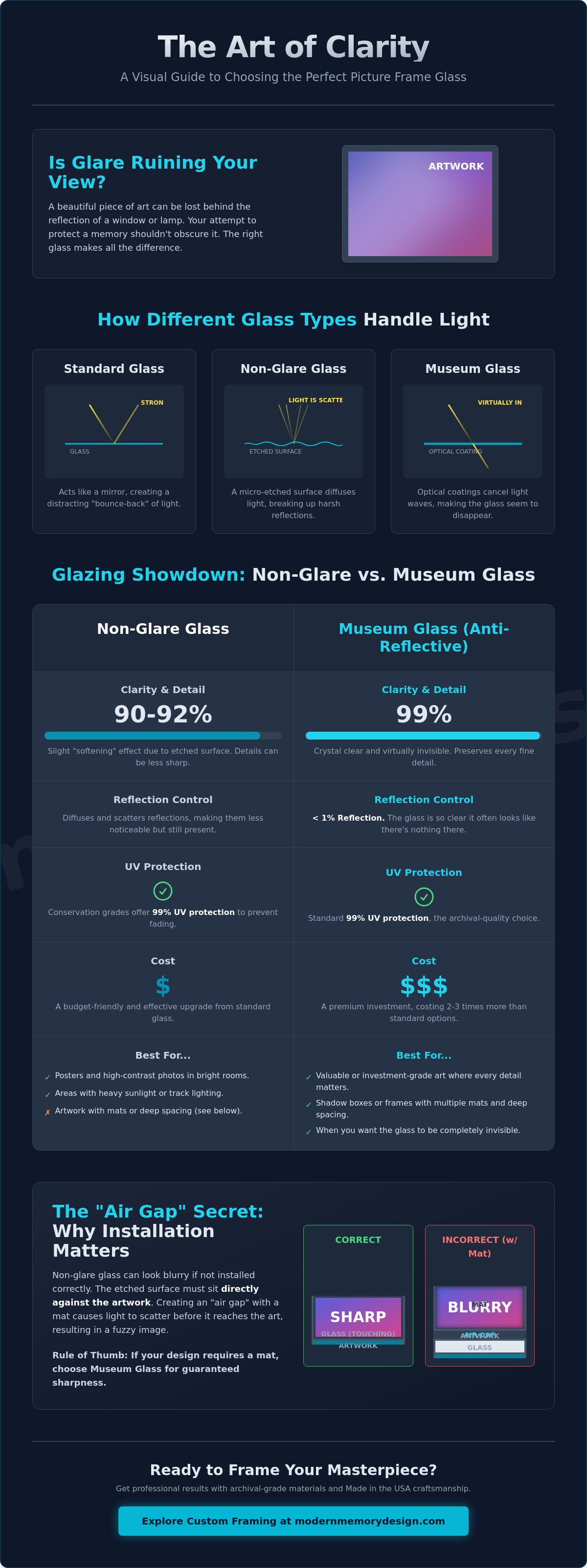
The effectiveness of this glazing comes from a manufacturing process called micro-etching. This treatment modifies the surface of the Picture-framing glass to create a fine texture that scatters incoming light rays. Instead of a single, concentrated "bounce back" of light, the waves are dispersed in different directions. It is a physical solution to an optical problem. You should know that this scattering can slightly reduce the perceived sharpness of the artwork. This "softening" happens because the light passing through the etched surface is also slightly diffused. Most high-quality non-glare options maintain roughly 90% to 92% light transmission, ensuring your colors stay true while the reflections vanish.
Choosing between non-glare and standard clear glass depends entirely on your room's environment. Standard float glass is highly reflective and glossy. It works perfectly in dim settings or rooms with controlled lighting where hot spots aren't a concern. However, in bright spaces, the matte finish of non-glare glass is superior. It provides a professional, gallery-quality look by neutralizing light from lamps or sunlit windows.
If you are framing a valuable diploma or a custom sized picture frame for a gift, the performance of non-glare glass offers a better long-term experience. While standard glass is often the baseline choice, the ability to actually see your art in a sunny room makes the non-glare upgrade a smart choice for most residential projects. For investment-grade art, the best glass options for custom picture frames often involve weighing this light diffusion against the total clarity of the piece.
Choosing between etched non-glare and anti-reflective glass is the most critical decision you'll make for your display. While both aim to reduce reflections, they use completely different technologies to get there. Etched non-glare glass is an affordable, "frosted" solution. It uses a physical matte finish to scatter light. In contrast, anti-reflective glass, often called museum glass, uses high-tech optical interference coatings to cancel out light waves. When you're comparing the best glass options for custom picture frames, the choice usually comes down to whether you want to hide reflections or make the glass disappear entirely.
The clarity factor is where these two materials diverge. Coated museum glass maintains 99% clarity because its surface remains smooth. Etched glass has a slight softening effect that can dull fine details or vibrant colors. From an archival perspective, both options can meet conservation standards. Research from May 2026 confirms that conservation-grade glazing consistently blocks 99% of UV rays. While UV-filtering glass typically costs 20% to 30% more than regular glass, museum glass is a premium investment that can cost two to three times as much as standard options.
Proximity is the secret to making etched glass look good. Because the surface is textured, the glass must sit directly against the art to remain clear. If you use a mat, you create an "air gap" that allows light to scatter before it even hits your photo. This is why many people think non-glare glass is naturally blurry; it's usually just an installation error. You should avoid using etched non-glare glass with more than two layers of matting. If your design requires deep spacing, anti-reflective coated glass is the only way to maintain a sharp, crisp image. If you're unsure which fit is right for your space, our team offers professional custom framing consultations to guide your choice.
Ultimately, the best glass options for custom picture frames depend on the value of the art and the intensity of the light in your room. If you want the highest level of protection without sacrificing a single detail, the investment in museum-quality glazing is always worth it for long-term preservation.
Modern 2026 home designs often prioritize natural light and open layouts. While beautiful, these floor-to-ceiling windows create a significant challenge for displaying art. If your wall is hit by "wall-wash" lighting or direct track LEDs, standard glass will turn your art into a giant mirror. Identifying these high-glare zones is the first step in choosing the best glass options for custom picture frames. You'll find that bold graphic prints, posters, and high-contrast photography are the ideal candidates for non-glare glazing. These art types have strong lines that remain visible even with the slight softening effect of an etched finish.
Conversely, you should be cautious with dark, moody oil paintings or intricate pencil sketches. These pieces rely on deep blacks and fine contrast that etched glass can sometimes dull. If you're framing a valuable heirloom where every graphite stroke matters, you might prefer the absolute clarity of anti-reflective museum glass. It's all about balancing the environment with the specific needs of the medium. We've seen that about 65% of our clients in bright suburban homes opt for non-glare solutions to combat midday sun reflections.
You can determine your room's "glare profile" with a simple flashlight test. Hold a light at various angles toward your wall. If you see a sharp, blinding reflection, you're in a high-glare zone. This is especially common when using large picture frames, which have more surface area to catch light. For these oversized pieces, we often recommend non-glare acrylic. It's lightweight and shatter-resistant, making it safer for high-traffic areas or homes with children. Whether you're using standard picture frame sizes or a custom build, matching the glazing to the light source ensures your art remains the focal point.
Your specific project often dictates the material. Diplomas, for example, are usually displayed under harsh office fluorescents. Non-glare glass is perfect here because it ensures text remains readable from every angle. When designing custom picture frames with deep shadow boxes, remember that distance is the enemy of etched glass. If you're using a "float" mount where the art is set back from the glazing, etched non-glare will make the piece look fuzzy. Our expert tip: only use etched non-glare for float mounts if the art is pressed directly against the glass. For everything else, stick to the best glass options for custom picture frames that prioritize optical clarity over surface texture.
Properly installing your glazing is just as important as choosing the right material. If you've invested in the best glass options for custom picture frames, a single fingerprint or a reversed pane can ruin the entire display. Unlike standard clear glass, non-glare options have a specific "front" and "back." You must identify the etched side before assembly. You can do this by running your finger along the edge; the side that feels slightly matte or textured is the one that faces the viewer.
Orientation is your first priority. If you place the textured side against the artwork, the light scattering effect won't function correctly, and your art will look blurry. During assembly, ensure your workspace is entirely dust-free. Particles trapped between the glass and the art are more visible under non-glare glass because of the way light hits the surface. Finally, secure the glass tightly within the molding. If the glass shifts, it can cause "ghosting," which is a distracting double-image effect that occurs when the "air gap" we discussed earlier becomes inconsistent.
Cleaning these surfaces requires a gentle touch to maintain their performance. You should never use ammonia-based cleaners, such as standard Windex, on premium non-glare or anti-reflective glass. These chemicals can damage the delicate micro-etched surface or strip away archival coatings. Considering that UV-filtering glass typically costs 20% to 30% more than regular glass, you want to protect that investment with proper maintenance. Use a dedicated, pH-neutral glass cleaner and a clean microfiber cloth instead.
The Microfiber Rule is essential for preventing micro-scratches. Paper towels are too abrasive and can leave lint or tiny permanent scratches on the matte finish. If you find a stubborn fingerprint, apply a small amount of cleaner to the cloth first, rather than spraying the glass directly. This prevents liquid from seeping under the frame edges and damaging your art or matting.
Large panes of glass are heavy and fragile. When you order custom picture frames online, your glass replacement arrives ready for installation, but handling it requires an edge-grip technique. Never touch the center of the pane with your bare hands. Skin oils are acidic and can leave permanent "clouds" on the etched surface that are difficult to remove. For public spaces or high-traffic areas, consider non-glare acrylic. It provides the same reflection-free benefits but is shatter-resistant and significantly lighter. If you're ready to upgrade your display, shop our premium glass options to find the perfect fit for your home.
At Modern Memory Design, we believe that providing the best glass options for custom picture frames involves more than just selling a product. It requires a deep commitment to archival integrity and personal craftsmanship. Since our founding, we've operated under the "Handmade For You" philosophy. This means every piece of glass is handled by expert framers who understand the value of your memories. We exclusively source Made in the USA materials to ensure superior clarity and long-term protection. Our conservation-grade glazing consistently blocks 99% of UV rays, which is the industry standard for preventing irreversible sun damage and fading.
Our local New Jersey workshop serves as the heart of our operations. By maintaining a physical presence in the community, we can offer a level of precision that faceless online retailers simply can't match. We manage the entire creative journey under one roof. This includes everything from high-resolution online photo printing to the final selection of specialized non-glare glazing. We don't just put art in a box. We build a protective environment designed to last for generations.
Standard "off-the-shelf" glass sizes often fail to protect unique or antique artwork. If a pane is even a fraction of an inch too small, it can shift and damage the edges of your art. We specialize in precision-cutting non-glare glass for non-standard dimensions and vintage frames. Our team uses advanced equipment to ensure every edge is smooth and every corner is square. We also utilize specialized packaging and shipping methods. This ensures that even the most delicate museum-grade glass arrives at your doorstep intact, whether you're across the street or across the country.
We invite you to experience our craftsmanship firsthand. Our Hasbrouck Heights, NJ frame shop offers in-person consultations where you can see the difference between etched and anti-reflective glass under real-world lighting. If you can't visit us in person, our online customization tool makes selecting the best glass options for custom picture frames intuitive and simple. You can upload your art, choose your frame, and select your glazing in minutes. Most custom orders are completed in 4 to 6 business days, reflecting our commitment to efficiency without sacrificing quality. Upgrade your art with professional non-glare glass today and see your masterpiece in a whole new light.
Your art is an investment in your home's personality. You now know that the "hazy" reputation of non-glare glass is often just a result of poor installation or excessive matting. By maintaining a tight air gap and choosing 99% UV-blocking materials, you ensure your memories stay vibrant for decades. Whether you're battling floor-to-ceiling windows or harsh office lights, selecting the best glass options for custom picture frames is the final step in professional preservation.
At Modern Memory Design, our expert framers in Hasbrouck Heights, NJ, use only Made in the USA archival materials to protect your work. We don't just ship frames; we provide a full-service experience. This includes a professional picture hanging service across NJ, NYC, and CT to ensure your piece is positioned perfectly away from distracting glares. It's time to stop looking at reflections and start seeing your art for what it really is.
Shop Custom Frames with Non-Glare Glass Options and give your masterpiece the gallery-quality finish it deserves. We look forward to helping you protect your next favorite memory.
Non-glare glass only appears blurry if it's positioned too far away from the artwork. When the glass sits directly against the image, the micro-etched surface remains virtually invisible to the eye. However, if you add thick matting or spacers, the light scatters in the gap before hitting the art, which creates a soft, hazy effect. It's one of the best glass options for custom picture frames when you want to eliminate reflections without losing sharp image detail.
You should avoid using Windex or any ammonia-based cleaners on non-glare glass. These harsh chemicals can leave a cloudy residue or damage the delicate etched surface over time. Instead, use a pH-neutral glass cleaner specifically designed for framing. Always apply the cleaner to a soft microfiber cloth first rather than spraying the glass directly. This prevents moisture from seeping into the frame and damaging the paper art or matting.
The primary difference lies in the technology used to reduce reflections. Non-glare glass uses a physical, micro-etched matte finish to scatter light. Museum glass uses high-tech optical interference coatings to cancel out light waves entirely. While non-glare glass has a soft, matte appearance, museum glass remains virtually invisible with less than 1% reflection and provides 99% UV protection to prevent your artwork from fading over time.
Non-glare glass is worth the investment if your casual photos are displayed in rooms with high ambient light or large windows. Standard glass often turns a photo into a mirror, making it impossible to see the image from certain angles. Upgrading to non-glare ensures your family memories remain visible throughout the day. It's a practical way to enhance the visibility of posters and snapshots in modern, sunlit living spaces without spending a fortune.
Your glass looks hazy because of the "air gap" created by the matting. Etched non-glare glass relies on being in close proximity to the artwork to maintain optical clarity. When a mat lifts the glass away from the paper, the light scatters in the space between, which creates a fuzzy or frosted appearance. To avoid this, limit yourself to a single thin mat or switch to anti-reflective museum glass for deep frame designs.
Standard non-glare glass does not automatically provide UV protection, but conservation-grade versions block up to 99% of harmful rays. When evaluating the best glass options for custom picture frames, you must check the specific archival rating of the product. Using a UV-filtering non-glare option is essential for protecting valuable prints from the sun, especially since this protection typically costs only 20% to 30% more than regular float glass.
The etched, matte side of the glass must face out toward the room to function correctly. This textured surface is designed to catch and scatter incoming light before it can create a reflection. You can identify this side by looking for a slight frosted appearance or feeling for a subtle texture with your fingernail. If you install the glass with the smooth side facing out, you'll still see a distracting, glossy glare from windows and lamps.
You can easily replace standard glass in your existing frames with a non-glare alternative. This is a popular way to refresh old displays that suffer from distracting reflections in a new home or office. Our New Jersey workshop provides precision glass cutting for any frame size, ensuring a perfect fit for your older moldings. Upgrading your glazing is one of the fastest ways to give an old piece of art a professional, gallery-quality look.
{"one"=>"Select 2 or 3 items to compare", "other"=>"{{ count }} of 3 items selected"}
Leave a comment