
Made in America (NJ)
for your Wall Decor
Handcrafted Picture Frames

Last Tuesday, a client walked into our workshop with a 2010 graduation photo that had almost completely vanished because it sat near a window for a decade. It's a painful sight we see too often, especially when you consider that 99% of this light damage is entirely preventable. You want your home to be filled with natural light, but you shouldn't have to sacrifice your cherished artwork to enjoy a sunny room. Choosing the right UV protection glass for picture frames is the single most important decision you'll make to ensure your photos, diplomas, and prints stay vibrant for a lifetime.
We understand the confusion that comes with picking the right materials, from weighing the benefits of museum glass to deciding if lightweight acrylic is better for your space. This 2026 guide promises to clear up that uncertainty by explaining exactly how UV-filtering glazing works to stop fading. We'll preview the different levels of protection available and show you how our expert framers in New Jersey select archival materials that meet professional conservation standards. You're about to learn how to preserve your most valuable pieces with total confidence.
UV protection glass for picture frames is a specialized glazing treated with a high-performance coating to block 97% to 99% of harmful ultraviolet rays. This technology acts like a high-SPF sunscreen for your art. While standard float glass might look identical to the naked eye, it lacks the chemical filters needed to prevent light-induced damage. Our expert framers use these conservation-grade materials to ensure that your memories don't fade, yellow, or become brittle over time.
Modern coatings are invisible. You won't see a tint or a haze on your artwork. Instead, you get a crystal-clear view that maintains the true colors of your piece. When selecting materials, you'll encounter specific terms like UV-filtering, Conservation Clear, and Museum Glass. Conservation Clear provides the baseline 99% protection, while Museum Glass adds an anti-reflective layer to reduce glare to less than 1%. Both options are essential for long-term preservation and professional-quality display.
Glazing is your artwork's first line of defense. It creates a controlled environment by blocking dust, insects, and moisture from reaching the delicate surface of your print or painting. Standard picture-framing glass is often insufficient for archival needs. Testing shows that basic glass blocks less than 45% of UV radiation. This allows the majority of high-energy light to penetrate the frame and break down chemical bonds in paper and ink. Professional glazing ensures that your art stays as vibrant as the day it was framed.
Choosing the right glass is a critical step in our handmade framing process. At our New Jersey workshop, we prioritize quality materials that offer lasting results. Whether you're framing a vintage poster or a professional diploma, the right glazing makes the difference between a temporary display and a lifelong heirloom. Our commitment to craftsmanship means we treat every project with the same meticulous attention to detail.
Light is the primary enemy of any framed work. To understand why, we have to look at the electromagnetic spectrum. Sunlight and artificial bulbs emit ultraviolet radiation, categorized into UVA, UVB, and UVC rays. While the earth's atmosphere filters out UVC, UVA (315-400 nm) and UVB (280-315 nm) penetrate standard window glass with ease. When these high-energy photons strike your artwork, they initiate a destructive process called photodegradation. This reaction breaks down the chemical bonds in ink, paint, and paper fibers at a molecular level.
The damage caused by light is irreversible. Once a pigment molecule is destroyed, it can't be repaired or "re-colored" through natural means. This destruction follows the "Cumulative Effect," a rule stating that light damage is based on the total amount of exposure over time. A piece of art in a dimly lit hallway for 10 years can suffer the same level of fading as a piece sitting in direct sun for 6 months. According to the NPS Museum Handbook, even low levels of visible light contribute to this decay, making high-quality filtration a requirement for long-term preservation.
Not all mediums react to light in the same way. Digital photo prints and many modern inkjet documents use dye-based inks, which are 50% more likely to fade than traditional oil or acrylic pigments. These dyes consist of small molecules that are easily shattered by UV energy. Water-based inks found in diplomas and certificates are also highly vulnerable; they often lose 30% of their color intensity within just 36 months of standard indoor exposure. Photofading is the chemical alteration of molecular structures by light energy. Using UV protection glass for picture frames acts as a shield, blocking up to 99% of these destructive wavelengths to keep colors vibrant for decades.
Light isn't just about color loss; it also carries thermal energy. When sunlight hits a frame, the glass can trap heat, creating a "greenhouse" effect that raises the internal temperature by 10 to 15 degrees compared to the rest of the room. This heat accelerates the rate of chemical decay in the paper. Over time, heat and light exposure cause the cellulose fibers in the paper to break down, leading to a brittle texture and a distinct yellow or brown "scorched" appearance.
High-quality glazing helps mitigate this heat buildup by reflecting or absorbing specific parts of the spectrum before they reach the art. At our New Jersey workshop, we've seen how professional-grade materials prevent the structural failure of delicate paper items. Choosing the right handcrafted frame components ensures that your memories aren't just displayed, but are actively protected from the environment. Proper UV filtration maintains the integrity of the substrate, preventing the yellowing that often ruins family heirlooms and professional certifications.
Choosing the right glazing involves a balance of safety, weight, and visual clarity. While both materials offer 99% UV protection, their physical properties differ significantly. Acrylic is roughly 50% lighter than traditional glass, which makes it easier to hang on standard drywall. However, acrylic is prone to static electricity. This static charge can pull loose pigments from the surface of charcoal, pastel, or pencil drawings. If you're framing delicate, friable media, UV protection glass for picture frames is the safer choice to ensure your art stays on the paper and not on the glazing.
Cleaning requirements also vary between the two. UV coatings are sensitive. You shouldn't use ammonia-based cleaners on either material, as they can degrade the protective layer over time. For glass, a microfiber cloth and a small amount of water usually suffice. Acrylic requires specialized anti-static cleaners to prevent fine scratches during maintenance. Research from the Canadian Conservation Institute highlights that the effectiveness of these filters depends on the stability of the coating, so proper care is vital for long-term performance.
Acrylic is the industry standard for shipping art. Its shatter-resistant nature ensures that if a package is dropped during transit, the artwork won't be sliced by shards of broken glass. We prioritize acrylic for large oversized picture frames because it reduces the overall weight on your wall hardware. In high-traffic areas, such as hallways or children's playrooms, the safety benefits are clear. If a frame falls, acrylic stays intact, protecting both the art and your family from injury.
For heirloom pieces and traditional displays, real glass remains a favorite for its scratch resistance and classic feel. Glass doesn't bow or flex like thin plastic can, providing a perfectly flat viewing surface. It's also the most economical choice for standard picture frame sizes like 8x10 or 11x14. Since it's less susceptible to surface abrasions, glass maintains its optical clarity for decades with minimal effort. Our expert framers often recommend UV glass for small to medium-sized projects where weight isn't a primary concern. It's a reliable, professional solution that's proudly used in our NJ workshop for high-quality, handmade results.
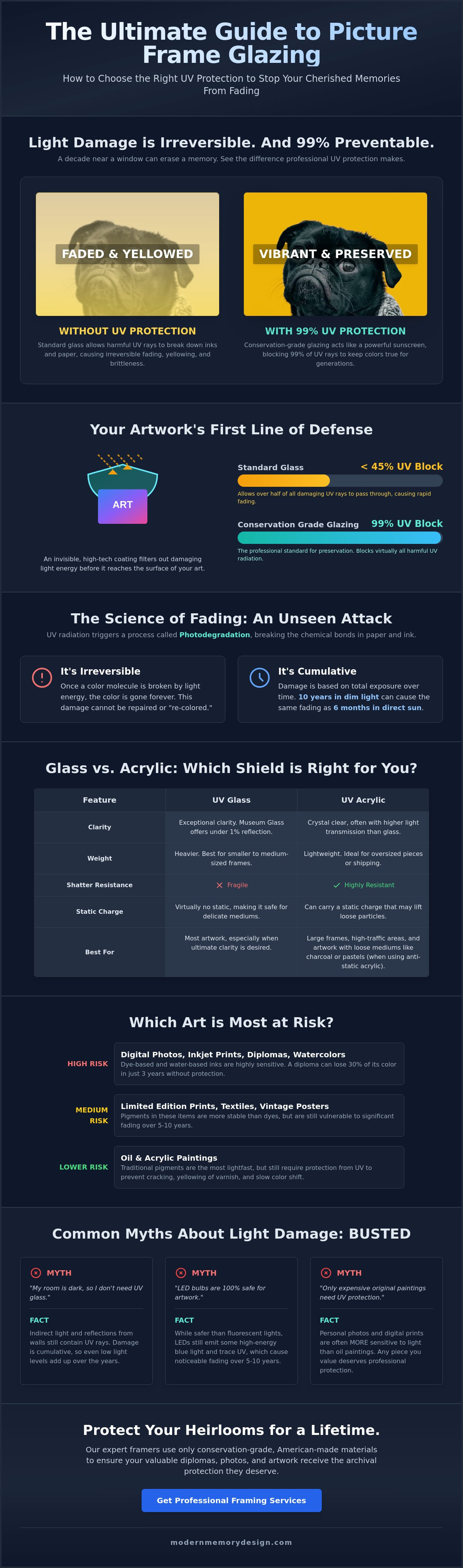
Deciding on the right glazing depends on two factors: what the item is worth to you and where it will live. At our New Jersey workshop, we use the "Five-Year Rule" to help customers decide. If you want your artwork to look identical in 2031 to the day you framed it in 2026, you need UV protection glass for picture frames. Standard glass allows roughly 45% of UV light to pass through. This is enough to dull vibrant colors and turn white paper a sickly yellow within just 24 months of display in a bright room.
Evaluate your item using these three specific criteria before you choose your glass:
Certain materials are naturally more sensitive to environmental factors. Original watercolors are the most vulnerable because their pigments are suspended in thin, delicate washes. Hand-signed memorabilia, where the ink sits on the surface of the paper or fabric, can fade into illegibility in less than three years without a barrier. If you're preserving sports history, using a specialized jersey frame with 99% UV filtering glass is essential to prevent the fabric fibers from becoming brittle. Similarly, professional diplomas are often printed on organic parchment that yellow and cracks when exposed to unfiltered light over time.
Not every project requires a museum-level investment. If you're framing a mass-produced poster or a digital photo you have saved on your cloud drive, standard glass is a budget-friendly choice. You can simply reprint the image if it starts to fade after a few years. Temporary decor, like a holiday-themed sign or a child's school drawing you plan to swap out next season, doesn't need long-term protection. However, our expert framers suggest that for any custom picture frames intended for permanent display, UV glass is the professional standard to ensure your memories stay vibrant.
Protect your investment from the very first day. Order your custom frame with premium UV protection glass from our expert craftsmen today.
Preserving your artwork requires more than just a beautiful border; it requires a commitment to archival standards that stand the test of time. At Modern Memory Design, we focus on providing the highest tier of protection for every piece that enters our workshop. We understand that your photos, diplomas, and original paintings are irreplaceable. That's why we prioritize the use of premium UV protection glass for picture frames to stop solar damage before it starts. Our approach combines traditional craftsmanship with 2026-grade materials to ensure your art remains as vibrant as the day it was framed.
We use 99% UV-blocking glazing for all high-end framing projects. This isn't just an optional upgrade for us. It's our baseline for quality. Our NJ-based artisans handle every item with extreme precision in our Hasbrouck Heights facility. We don't outsource our labor to third parties. Every frame is handcrafted right here in the USA. Our "Made in USA" guarantee covers everything from the solid wood moldings to the specialized glass components. This local oversight ensures that your art never leaves the hands of experts who care about the final result.
Customization is at the heart of what we do. Choosing the right UV protection glass for picture frames depends on where you plan to hang the piece. We offer two primary professional options:
You can access our expertise regardless of where you live. For local clients in the Bergen County area, we offer professional consultations at our Hasbrouck Heights, NJ location. You can see the difference between Conservation Clear and Museum Glass in person under various lighting conditions. If you're outside the tri-state area, our online store provides the same level of customization and care. We've perfected our nationwide shipping process over years of service. We use specialized, reinforced packaging designed to keep glass intact during transit. Every order is tracked and insured for your peace of mind. Protect your memories today with a custom UV-protected frame from Modern Memory Design.
Your artwork deserves a permanent defense against the silent damage caused by sunlight and indoor lighting. Choosing the right UV protection glass for picture frames ensures that vibrant colors and delicate papers remain intact for decades. By opting for conservation-grade materials that block 99% of harmful ultraviolet rays, you prevent the chemical breakdown that leads to yellowing and brittle textures. Our team at Modern Memory Design brings expert craftsmanship to every project, ensuring your memories are preserved with museum-quality precision. Every frame is handcrafted in our New Jersey workshop to meet rigorous archival standards. It's a practical investment that pays off every time you look at a crisp, unfaded image on your wall. Don't leave your favorite photos or valuable prints to chance when professional protection is a simple choice. We handle the technical details and provide free shipping on every frame order, making it easier than ever to secure your legacy. Your art tells a story, and we're here to make sure it stays bright for years to come.
Shop Custom Frames with UV Protection at Modern Memory Design
UV protection glass for picture frames blocks up to 99% of harmful ultraviolet rays, but it doesn't stop fading entirely. While UV radiation is the primary cause of damage, approximately 25% of fading results from visible light and another 25% comes from heat and humidity. Our expert framers recommend keeping artwork away from direct sunlight to minimize these secondary factors and ensure your piece remains a masterpiece of craftsmanship.
You can check for UV protection by holding the glass at an angle to see if it reflects a slight ripple or orange-peel texture on the surface. Standard glass usually appears perfectly smooth and flat under direct light. Another reliable method involves using a UV flashlight; if the light passes through and makes a fluorescent object glow behind it, the glass lacks a protective coating.
UV glass carries a higher price tag than standard 2mm float glass because of the specialized silica-based coating applied during manufacturing. It's a wise investment. This extra cost pays for itself by preventing the 40% of damage caused specifically by indoor and outdoor UV sources. Most professional frame shops consider this the industry standard for any artwork intended to last more than 5 years.
You can easily swap out standard glass for UV protection glass in any existing frame to upgrade your art's longevity. It's a simple process. Our New Jersey workshop frequently performs these glass replacements to help customers preserve family photos or vintage prints. Simply bring your frame in, and our team will cut a new piece of archival-quality glass to your exact dimensions.
High-quality UV glass is designed to be optically clear, though some brands may show a very faint yellow or warm tint when held against a white background. This subtle shift is rarely visible once the glass is placed over artwork. Unlike standard glass, which often has a green edge from iron content, premium conservation glass maintains true color for your prints and paintings.
Conservation Clear blocks 99% of UV rays but still has the reflective shine of normal glass, whereas Museum Glass adds an anti-reflective coating. This coating reduces reflections to less than 1%, allowing the details of your "Handmade For You" projects to shine through without distracting glare. While both offer identical protection levels, Museum Glass provides a much clearer view of the underlying artwork.
Clean your UV glass using a soft, lint-free microfiber cloth and a dedicated ammonia-free glass cleaner. Avoid spraying liquid directly onto the frame, as it can seep under the edges and damage the art or the acid-free matting. Instead, mist the cloth first and wipe in a circular motion to remove fingerprints or dust without scratching the protective surface.
UV glass is engineered to filter light wavelengths, not to insulate against temperature changes or heat transfer. While it stops the 99% of UV rays that cause chemical breakdown, heat can still cause paper to become brittle or warp over time. We suggest hanging your framed pieces at least 3 feet away from radiators or heating vents to ensure complete preservation.
{"one"=>"Select 2 or 3 items to compare", "other"=>"{{ count }} of 3 items selected"}
Leave a comment