
Made in America (NJ)
for your Wall Decor
Handcrafted Picture Frames

What if that stack of finger paintings on your kitchen counter wasn't clutter, but the foundation of a high-end gallery wall? As of 2026, the most significant interior design trend is a shift toward personal, meaningful artwork, with a specific focus on elevating children's creations into permanent home decor. You likely want to honor your child's creativity, but non-standard sizes and fragile construction paper make finding the right ideas for framing kids' artwork feel like a chore.
We understand that you want to protect these sentimental pieces from fading or tearing without your home looking like a classroom. This guide will show you how to transform temporary sketches into professional-quality heirlooms using expert techniques like custom-sized frames and archival materials. You'll discover 15 creative strategies to build a cohesive display, including how to use the most popular frame colors like black and walnut, which account for 45% of sales in 2026, to create a sophisticated look that lasts for years. From rotating displays to museum-quality shadow boxes, you'll learn to curate a space that celebrates your young artist with the craftsmanship they deserve.
The refrigerator door is the traditional first gallery for any young artist. While magnets and clips serve a purpose for the week's school projects, they don't provide the permanence or protection that a true masterpiece deserves. Moving art from the kitchen to the living room walls marks a significant shift in how you value your child’s work. By exploring professional ideas for framing kids' artwork, you transition from simply managing paper clutter to curating a family legacy. This process isn't just about home decoration; it's about treating a child's unique vision with the same respect as a gallery-acquired print.
Displaying artwork in shared family spaces like the hallway or living room has a profound impact on a child's development and self-esteem. It validates their effort and signals that their contribution to the home is significant. Understanding the developmental stages of child art helps parents appreciate the cognitive complexity behind a simple scribble or a bold color choice. When a child sees their work encased in a handcrafted wood frame rather than pinned to a corkboard, their sense of accomplishment grows. These pieces eventually become a visual timeline of your family’s history, documenting growth and changing perspectives over the years.
You don't need to frame every single doodle to celebrate your child's creativity. Effective curation means identifying "hero" pieces that stand out from the daily collection. Look for milestone moments, such as the first recognizable self-portrait or a painting where they experimented with complex color theory. You should also consider the color palette of your current room decor. A vibrant finger painting might be the perfect pop of color for a neutral-toned home office or a sleek modern hallway. To manage the high volume of art kids produce, we recommend using a "Three-Pile System" to stay organized.
A curated home doesn't have to choose between being child-friendly and looking sophisticated. Using high-quality ideas for framing kids' artwork, such as custom-sized frames that fit non-standard construction paper, allows you to maintain a professional aesthetic. At Modern Memory Design, we focus on craftsmanship that bridges this gap. We ensure your child’s art looks intentional and polished within your existing interior design, turning a simple drawing into a masterpiece of design and craftsmanship.
Every medium requires a unique display strategy. Research into Art activities for young children shows that early creative expression often involves a mix of tactile materials, from thin newsprint to heavy cardboard. When you're exploring ideas for framing kids' artwork, the choice of frame must balance aesthetics with the physical requirements of the art. Simple pencil sketches or crayon drawings on standard paper thrive in classic wood frames. These frames provide a clean, professional boundary that instantly elevates a quick school project into a piece of gallery-worthy decor.
Float mounting is a superior technique for artwork on watercolor paper or pieces with deckled, uneven edges. Instead of hiding the paper's character behind a mat, the art is "floated" on top of a backing board. This creates a subtle shadow around the perimeter, giving the piece a three-dimensional presence. It's a sophisticated look that highlights the texture of the paper and the effort put into the work. For a series of smaller drawings, multi-opening mats allow you to group several related sketches into one large frame. This creates a cohesive narrative and prevents your walls from feeling cluttered with tiny, disparate frames.
Standard frames often fail when it comes to "messy" art. Projects involving dried pasta, pipe cleaners, or thick layers of clay are too deep for a traditional picture frame. Shadow boxes are the essential solution for these 3D masterpieces. These deep-set frames provide enough clearance so the glass doesn't touch or crush the delicate elements. To keep these pieces secure over time, we use specialized mounting techniques that prevent heavy items from shifting. If your child creates on non-standard surfaces, custom picture frames offer the flexibility to specify the exact depth and dimensions needed to house the piece safely.
The molding style you select defines the personality of the display. Sleek black or white frames offer a "Museum of Modern Art" aesthetic that fits perfectly in contemporary living spaces. Alternatively, placing a bright finger painting in an ornate gold or vintage frame creates a playful "Old Master" juxtaposition. It's a charming way to treat a child's creativity with humorous reverence. For those who prefer a warm, Scandi-inspired vibe, natural wood tones like maple or oak are ideal for nurseries and family rooms. You can browse our collection of handmade frames to find a style that matches your home’s existing architecture while celebrating your child’s unique vision.
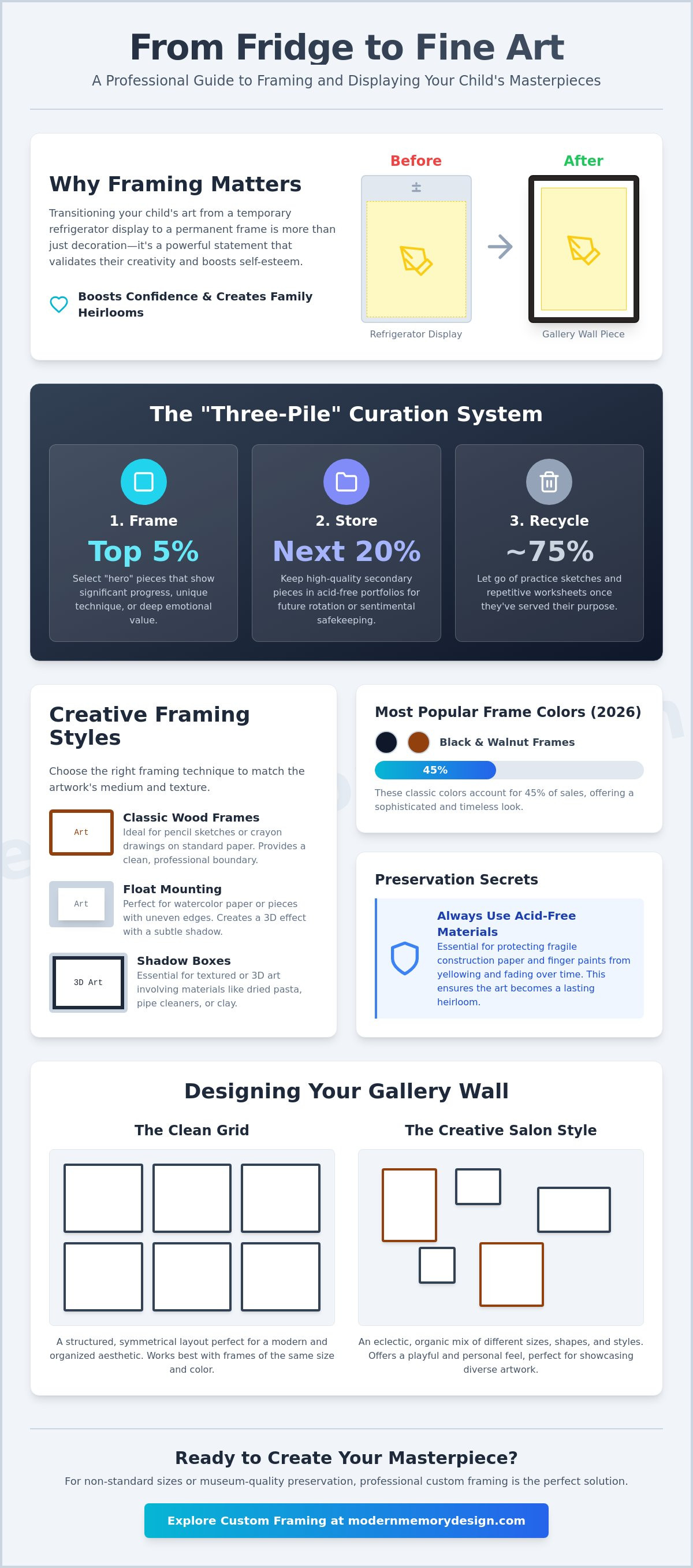
Most childhood creations start on highly acidic construction paper. This material contains lignin, which causes the paper to yellow and become brittle within a few years. When looking for ideas for framing kids' artwork, preservation should be your top priority. Without a protective environment, the vibrant finger paints and markers your child used will fade significantly due to light exposure and chemical reactions. Professional framing isn't just about looks; it's about stopping the clock on paper decay and ensuring these memories last for decades.
Professional framing creates a controlled environment for these fragile pieces. Acid-free matting is essential because it provides a chemical buffer between the art and the backing. It also keeps the artwork from touching the glass. This gap prevents condensation damage or "ink transfer," where the art sticks to the glass over time and becomes impossible to remove without tearing. We also recommend UV-protection glass. This specialized glazing filters out up to 99% of harmful ultraviolet rays. This is critical for pieces hanging in sun-drenched hallways or living rooms where sunlight can bleach colors in just one season.
"Museum quality" isn't just a marketing term for famous paintings. It means using materials that won't degrade the art over time. Proper framing acts as a protective capsule for these sentimental items. For messy mediums like charcoal or chalk, we use spacers to create a "well" inside the frame. This ensures the glass never touches the surface, preventing smudges. We always use reversible mounting techniques, such as Japanese paper hinges and acid-free paste. This means the art isn't glued down permanently and can be removed safely in the future if you choose to reframe it.
Sometimes the original art is too large or physically compromised to display safely. In these cases, scanning the piece is a brilliant alternative. You can use online photo printing to resize a giant school mural into a standard 11x14" frame. This allows you to include the piece in a gallery wall without it overwhelming the room. Digital cleanup can also remove unwanted creases or food stains from a kitchen-table masterpiece. It gives the artwork a fresh, professional finish while the original stays safe in a climate-controlled portfolio. This method is also one of the best ideas for framing kids' artwork when you want to share identical copies with grandparents or other family members.
Designing a gallery wall is the most effective way to manage the high volume of art children produce. It moves beyond individual frames to create a bold, intentional statement in your home. When you research ideas for framing kids' artwork, you'll find that the most successful displays follow a specific layout logic. Grouping several pieces together turns a collection of loose papers into a structured design element that complements your home’s architecture rather than cluttering it.
The Grid Method is ideal for parents who crave visual order. By using standard picture frame sizes, such as a consistent series of 11x14 frames, you create a clean and symmetrical look. This rigid structure helps balance the often chaotic and vibrant nature of finger paintings and sketches. Conversely, the Salon Hang is perfect for an eclectic, evolving collection. This style allows you to mix different frame finishes and sizes, creating a wall that feels curated over time. If you want a low-commitment option, picture ledges are a brilliant solution. They allow you to lean frames against the wall, making it incredibly easy to rotate new masterpieces in as they arrive from school without making new holes in the drywall.
A successful gallery wall requires a rehearsal. Before you pick up a hammer, lay your framed pieces out on the floor to experiment with spacing and balance. Once you're happy with the arrangement, cut out paper templates for each frame and tape them to the wall. This visual guide ensures your focal point piece, usually the largest or most vibrant artwork, is anchored at eye level. Most professionals recommend centering the collection about 57 to 60 inches from the floor to match standard gallery heights.
Don't feel limited to only using drawings. A truly dynamic wall integrates various types of media to tell a complete family story. You can pair a child’s abstract illustration with high-quality family photography or even a diploma. To keep the look cohesive, use picture frame sizes that vary but share a consistent matting style. Adding 3D elements, like a wooden initial or a small sculpture on a nearby shelf, adds depth and prevents the display from feeling too flat. This approach ensures your ideas for framing kids' artwork result in a professional, polished finish.
If you're ready to start building your collection, you can shop our handcrafted frames to find the perfect match for your home gallery. We offer everything from modern sleek moldings to ornate vintage styles to help you create a display that is as unique as your child's imagination.
While DIY projects offer a quick fix for school sketches, certain pieces demand a higher level of care. When your child produces a large-scale mural or a fragile 3D masterpiece, standard retail frames often fall short. Professional custom framing provides the structural integrity and archival protection these sentimental items require. Moving beyond the home craft kit allows you to access specialized materials like UV-protective glass and acid-free mounting that aren't available in big-box stores. This is where the most effective ideas for framing kids' artwork transition from temporary storage into a permanent home investment.
Modern Memory Design provides a "White Glove" experience that simplifies the entire process. We offer a seamless bridge between our online store and our physical NJ frame shop. You can easily order custom frames online for those non-standard paper dimensions that don't fit into traditional 8x10 or 11x14 sizes. For local clients, our design consultations help you select the perfect molding and matting to complement your existing interior design. We treat every finger painting and crayon drawing as a masterpiece of design and craftsmanship, ensuring it receives the same attention as a professional gallery piece.
Our Bergen County workshop is the heart of our operation. Every frame is handmade for you by expert framers who understand the value of family memories. We don't believe in long wait times; most custom framing orders are completed in just 4 to 6 business days. Whether you're looking for a sleek modern molding or a French gold leaf finish, our frames are crafted specifically to tell your art’s unique story. This local, American-made approach ensures high-quality results that last far longer than mass-produced alternatives.
Creating a large-scale gallery wall is often the most intimidating part of the process. Many homeowners worry about crooked frames or damaging their drywall with multiple nail holes. We address this by offering professional art installation services throughout New Jersey, NYC, and Connecticut. With the national average for professional installation ranging from $98 to $213 per job as of 2026, hiring an expert ensures your collection is level, secure, and safe for high-traffic family areas.
Our team handles the heavy lifting, from measuring precise spacing to using the correct hardware for your specific wall type. This service is particularly valuable for complex layouts or when you're integrating heavy shadow boxes and large-format prints. By combining our expert ideas for framing kids' artwork with professional installation, you can finally turn that creative clutter into a curated, museum-quality display that your family will treasure for years to come.
Transforming your home from a cluttered space into a curated gallery starts with intentional choices. You've learned how to select "hero" pieces and use museum-quality archival materials to prevent the inevitable fading of construction paper. By implementing professional ideas for framing kids' artwork, you provide your child with a permanent sense of accomplishment while maintaining a sophisticated home aesthetic. Whether you choose a modern grid layout or a deep shadow box for 3D creations, the result is a space that tells your family's unique story with clarity and style.
Our team at Modern Memory Design is ready to help you preserve these fleeting creative moments. Every frame is handmade in the USA at our expert NJ-based framing workshop. We use only the highest quality materials to ensure your art remains protected for decades. Transform your child’s art into a masterpiece at Modern Memory Design. Your child's imagination deserves a professional stage, and we're here to help you build it.
Use custom-sized picture frames to accommodate non-standard paper dimensions without cropping the work. Our Bergen County workshop specializes in handcrafted frames built to your specific measurements; ensuring even oversized finger paintings or long murals fit perfectly. This is one of the most effective ideas for framing kids' artwork because it eliminates the need to fold or trim sentimental pieces to fit retail store options.
Frame the original if you value the tactile texture of the paint; but choose a digital scan for fragile or oversized items. Scanning allows you to resize a giant school mural into a manageable 11x14 inch print. It also lets you digitally remove food stains or deep creases before printing. This approach protects the original in a portfolio while the display version looks polished and professional.
Black and walnut are the most reliable choices; accounting for 45% of sales in 2026. These neutral finishes provide a sophisticated border that anchors the vibrant primary colors often found in markers and crayons. They help the artwork feel like an intentional part of your home decor. If the room is a Scandi-inspired nursery, natural wood tones like maple offer a softer, warm alternative.
Install UV-protection glass and acid-free matting to create a protective environment for the paper. UV glass filters out 99% of harmful rays that cause rapid bleaching of bright colors. Since construction paper contains lignin that yellows over time; the acid-free mat acts as a chemical buffer. These archival materials ensure that a quick school project remains vibrant for decades rather than fading in a single season.
Yes, shadow boxes are the professional solution for projects involving pasta, pipe cleaners, or clay. These deep-set frames provide the necessary clearance so the glass doesn't touch or crush the three-dimensional elements. We use specialized mounting techniques to secure heavy objects; preventing them from shifting or falling. It's a great way to treat a child's mixed-media sculpture with the same respect as museum art.
Aim for three to nine pieces to create a balanced display without overwhelming the room. Odd numbers often feel more organic in a salon-style hang; while even numbers work best for a clean, symmetrical grid. You don't need to fill the entire wall at once. Start with a few "hero" pieces and leave space to rotate in new masterpieces as your child's creative skills evolve.
Float mounting suspends the artwork on top of a backing board rather than hiding the edges behind a mat. This technique is perfect for watercolor paper or pieces with deckled, uneven edges that add character to the work. It creates a subtle shadow around the perimeter; giving the art a three-dimensional presence. It's an excellent way to highlight the unique texture and physical quality of the paper itself.
Start by placing your largest or most vibrant frame at eye level; which is typically 57 to 60 inches from the floor. This serves as the focal point for the entire collection. Arrange smaller frames around this center piece; maintaining a consistent gap of 2 to 3 inches between each frame. Always rehearse the layout on the floor first to ensure the visual weight is balanced before you hammer any nails.
{"one"=>"Select 2 or 3 items to compare", "other"=>"{{ count }} of 3 items selected"}