
Made in America (NJ)
for your Wall Decor
Handcrafted Picture Frames

The most expensive glazing option might actually be the worst choice for your specific piece of art. Most people assume glass is the gold standard for quality, but for a large custom frame, it's often the riskiest material you can use. You've likely felt that familiar worry about a heavy frame pulling on your drywall or the nightmare scenario of glass shattering during a move and slicing through your favorite print.
We know you value expert craftsmanship and want your memories protected for the long haul. This 2026 comparison guide clarifies the acrylic vs glass for picture frames debate so you can stop second-guessing your order. You'll learn how to achieve 99% UV protection to stop fading in its tracks and why acrylic's lighter weight often offsets its higher upfront cost. We'll break down the clarity ratings, scratch resistance, and the specific scenarios where one material clearly outperforms the other to ensure your art remains a masterpiece for decades.
Glazing is the transparent layer that sits between your artwork and the outside world. It acts as a shield against the elements, but it's also a lens through which you view your memories. In 2026, deciding on acrylic vs glass for picture frames is no longer just about picking the cheapest option. It's a technical decision. Modern manufacturing has drastically improved in the last few years, meaning the clarity gap that once existed between glass and acrylic has virtually disappeared. Today, your choice impacts three primary factors: the safety of the piece, the total weight on your wall, and how light interacts with the art. There is no universal best material. There's only the best option for your specific environment.
Glazing does more than just look pretty. It blocks dust, moisture, and accidental physical contact from fingers or cleaning supplies. If you're using archival or acid-free materials for your backing and matting, the glazing completes that protective envelope. The size of your project often dictates the material. When you look at standard picture frame sizes, you'll find that larger dimensions almost always lean toward acrylic. This prevents the glazing from bowing or putting excessive pressure on the art itself, ensuring the longevity of the piece.
At Modern Memory Design, we prioritize durability because we ship handcrafted frames across the country from our New Jersey workshop. Shipping glass is inherently risky. Even with expert packing, a single drop can lead to the shatter factor. When glass breaks, it doesn't just ruin the glazing; the shards often slice through the artwork, causing irreparable damage. Acrylic is virtually shatterproof, making it the safer choice for high-traffic areas like hallways, offices, or children's rooms.
Weight is another critical consideration for your home or office. A 24x36 inch frame with standard 2.5mm glass is significantly heavier than its acrylic counterpart. If you choose a heavy glass frame for a large project, you might need professional picture hanging services to ensure it's safely anchored into studs rather than just drywall. For most residential projects in 2026, the lightweight versatility of acrylic wins for ease of installation. Glass remains a favorite for smaller, tabletop frames where that classic heft feels premium and scratch resistance is a priority.
Glass is the original standard for a reason. Its primary advantage lies in its surface hardness. Unlike plastic-based alternatives, glass is highly resistant to the micro-scratches that can accumulate over years of dusting. This makes it a reliable choice for high-traffic areas where frames might be touched or wiped down frequently. When evaluating acrylic vs glass for picture frames, collectors often point to the traditional heft of glass as a sign of quality. It feels substantial in the hand and provides a rigid, flat surface that won't bow over time.
Maintenance is another area where glass shines. You can use standard ammonia-based glass cleaners and a paper towel without worrying about damaging the surface. Most acrylics require specialized non-ammonia cleaners and microfiber cloths to avoid permanent hazing. For small, standard-sized projects, glass is also the more cost-effective option. It remains the budget-friendly go-to for retail-ready frames found in local shops across New Jersey and beyond.
Not all glass is created equal. Standard glass is the baseline, typically blocking less than 45% of UV radiation. It's suitable for non-valuable snapshots, but it won't stop your art from fading. To meet 2026 industry standards for preservation, you must upgrade to conservation-grade glazing. Conservation glass blocks 99% of UV rays, protecting your memories from the damaging effects of sunlight. If you want the ultimate viewing experience, Museum Glass combines that 99% UV protection with an advanced anti-reflective coating. It's so clear that it often looks like there is no glass in the frame at all, making it a favorite for our custom professional framing projects.
Glass is particularly well-suited for smaller formats, such as 8x10 or 11x14 frames. At these sizes, the weight of the glass isn't a burden on your wall hardware, and the rigidity ensures a crisp, professional look. It's also the essential choice for specific artistic mediums. If you're framing charcoal, pastel, or pencil drawings, glass is your only safe bet. Acrylic carries a natural static charge that can literally pull loose pigment off the paper, ruining the work. Glass remains static-neutral, keeping the art exactly as the artist intended. For tabletop displays, the weight of a glass-fronted frame provides a stable base that is less likely to tip over if the table is bumped.
High-quality framing acrylic, often referred to by the brand name Plexiglass, has shed its old reputation as a cheap plastic substitute. In 2026, it's considered a premium glazing material used by museums and galleries worldwide. When weighing acrylic vs glass for picture frames, the most immediate benefit is safety. Acrylic is virtually shatterproof. If a frame falls, the glazing might crack under extreme force, but it won't explode into the dangerous shards associated with glass. This makes it the only responsible choice for high-traffic environments, public spaces, or homes with children and pets.
Optical clarity is another area where modern acrylic excels. Standard glass often has a subtle green tint caused by iron content, which can slightly shift the colors of your artwork. Acrylic is naturally colorless and offers superior light transmission, ensuring the whites in your photos stay crisp and the colors remain vibrant. It's also roughly 50% lighter than glass. This massive weight reduction significantly lowers the stress on your frame's corner joints and hanging hardware, preventing the wood from pulling apart over time.
For projects exceeding 24x36 inches, acrylic isn't just a preference; it's a structural necessity. We utilize it as the standard for large picture frames because it provides the flexibility needed to prevent "bowing." Large sheets of glass are heavy and rigid, which can cause them to sag or even crack under their own weight. Acrylic's slight flexibility allows it to sit perfectly flat in oversized moldings without compromising the frame's integrity.
Shipping safety is the primary reason online custom framing has shifted toward acrylic. While glass is fine for a local pickup at our New Jersey workshop, it rarely survives the rigors of national couriers when used in large formats. By choosing acrylic for your online orders, you're ensuring your art arrives in one piece, ready to hang, without the risk of glass shards ruining your print during transit.
While acrylic has many strengths, it carries one specific technical drawback: static electricity. Standard acrylic acts like a magnet for dust and fine particles. This creates what professional framers call the "pastel problem." You should never use standard acrylic for charcoals, pastels, or any art with loose pigments. The static charge can literally pull the dust off the paper and onto the inside of the glazing, blurring your image and damaging the original work. For these delicate pieces, we always recommend the static-neutral glass options discussed previously, or specialized anti-static acrylic for high-end conservation projects where weight is still a concern.
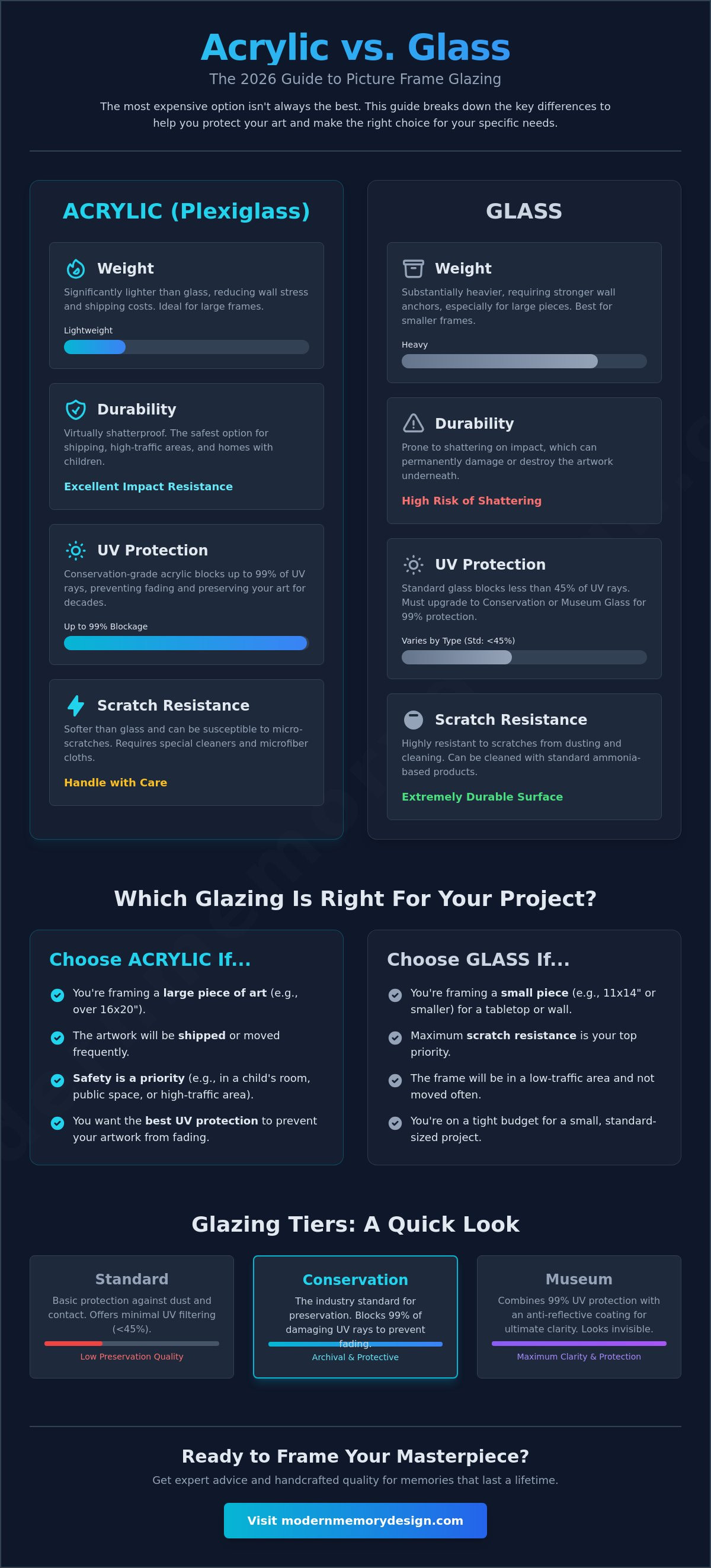
When you look at the technical specifications of acrylic vs glass for picture frames in 2026, the similarities are as important as the differences. Both materials now offer conservation-grade options that block 99% of harmful UV rays. This is the industry standard required to prevent your artwork from fading or becoming brittle over time. A common misconception is that acrylic will eventually yellow or become cloudy. This hasn't been true for high-quality, framing-grade acrylic for years. Modern acrylic is chemically stable and maintains its crystal-clear appearance for decades, just like glass.
Cost is often the deciding factor, but it requires a long-term perspective. Glass is usually cheaper to purchase for a single small frame at a local shop. However, acrylic is often more cost-effective for larger projects when you factor in shipping safety and durability. Replacing a shattered piece of glass and a damaged print is far more expensive than the initial investment in acrylic. Maintenance also differs. While glass is forgiving, acrylic requires a soft microfiber cloth and a specialized, non-ammonia cleaner. Using paper towels or standard window spray on acrylic will cause permanent micro-scratches that dull the surface.
The physical load on your wall is a major safety concern. For a 24x36 poster frame, a sheet of glass can weigh over 10 pounds, whereas acrylic weighs approximately 5 pounds. This extra weight doesn't just make installation harder; it puts constant tension on the custom picture frame molding. Over several years, the weight of heavy glass can cause the bottom rail of a wood frame to pull away from the sides. In public spaces, children's rooms, or earthquake-prone areas, the lightweight and shatterproof nature of acrylic provides essential peace of mind.
UV protection is non-negotiable if you are investing in online photo printing for your home. Even indirect sunlight can cause colors to shift in as little as 24 months without proper glazing. You must choose between 'Clear' finishes, which offer maximum vibrancy, and 'Non-Glare' finishes, which use a matte etching to scatter light. To verify if your current frame has UV protection, look for a slight yellow tint when holding the glazing over a piece of white paper; conservation-grade materials often have this subtle hue as a result of the UV-blocking coating. If you're still unsure which glazing suits your space, our professional frame shop team is available to help you select the perfect match.
Choosing between acrylic vs glass for picture frames shouldn't be a guessing game based on price alone. Your decision directly affects the lifespan of your art and the safety of your home. If you are picking up a small, 8x10 wedding photo from our New Jersey workshop, standard glass provides a classic, scratch-resistant finish that fits most budgets. However, if you are ordering a custom piece to be shipped across the country, acrylic is the superior choice to ensure your masterpiece arrives in one piece. We handle these technical details every day at Modern Memory Design, ensuring that every frame we build uses the specific glazing required for its size and medium.
Before you finalize your order, run through this quick checklist to evaluate your project. Is the artwork a delicate charcoal drawing? Choose glass to avoid static damage. Is the frame going in a high-traffic hallway or a child's bedroom? Choose acrylic for its shatterproof safety. By matching the material to the environment, you guarantee that your memories remain protected for decades. High-quality materials aren't just an upgrade; they are an insurance policy for your most valued photos and prints.
To simplify your decision, we use a specific set of criteria based on 2026 framing standards. Use the following guidelines to select the right material for your project:
For any frame over 20x30 inches, acrylic is the recommended professional standard to ensure structural integrity and shipping safety. This prevents the frame from becoming dangerously heavy and eliminates the risk of glass shards destroying your art during transit.
Selecting the right glazing on the Modern Memory Design website is a straightforward process. When you use our online tools to design your custom picture frames, you can toggle between standard and conservation-grade options. We take immense pride in our packaging process. Every frame is secured with reinforced corners and multi-layer cushioning to ensure it reaches your door in gallery-ready condition. Whether you need the scratch resistance of traditional glass or the lightweight versatility of modern acrylic, our expert framers are here to guide you. Upload your photo and start your custom framing project today to give your art the professional protection it deserves.
Choosing between acrylic vs glass for picture frames is the final technical step in transforming a simple print into a lasting legacy. You've seen how acrylic's lightweight, shatterproof nature makes it the essential choice for large-scale projects over 24x36 inches. You also understand that traditional glass provides the scratch resistance and static-neutral surface required for smaller, delicate mediums like charcoal or pastel. Every project has a unique set of requirements. The right glazing ensures those needs are met without sacrificing the 99% UV protection required for 2026 conservation standards.
Our team at Modern Memory Design brings expert NJ-based craftsmanship to every order. We take pride in creating products that are handmade in the USA, using only professional-grade materials. We want your framing experience to be as seamless as the final result on your wall. That's why we offer free shipping on all custom orders, giving you peace of mind from our workshop to your home. It's time to give your memories the protection they deserve.
Design Your Custom Frame with Expert Glazing at Modern Memory Design and start your next project with confidence. Your art is ready for its spotlight.
Framing-grade acrylic generally has a higher upfront cost than standard glass. However, for online custom orders, the lighter weight of acrylic often reduces shipping costs significantly. It also eliminates the expense of replacing glass and artwork if a frame breaks during transit. When you factor in long-term durability and safety, acrylic is often the more cost-effective investment for your memories.
No, modern conservation-grade acrylic is chemically stable and will not yellow. Older, cheaper plastics from decades ago gave acrylic a bad reputation; however, the materials used in 2026 are specifically designed for museum-quality longevity. Your art will remain clear and vibrant for decades. We only use high-quality materials that ensure your display looks as good in twenty years as it does today.
You should never use Windex or any ammonia-based cleaners on acrylic. Ammonia causes the surface to become cloudy or fogged permanently. Instead, use a specialized acrylic cleaner and a clean microfiber cloth. This combination prevents the micro-scratches that can occur with paper towels. Keeping your frame clean requires the right tools to maintain that crystal-clear finish.
Both materials are excellent for sunlight protection if you choose the conservation grade. To be classified as conservation-grade in 2026, glazing must block at least 97% of UV light. Many of our high-end acrylic and glass options offer 99% UV protection. This level of defense is essential for preventing fading and ensuring your photos don't become brittle over time.
When considering acrylic vs glass for picture frames for large posters, we use acrylic because it's 50% lighter than glass. Large sheets of glass are prone to bowing or cracking under their own weight. Acrylic's natural flexibility allows it to stay flat and secure in oversized frames. This structural integrity is vital for any piece larger than 24x36 inches.
Yes, you can easily replace the glass in your existing frame with a custom-cut sheet of acrylic. This is a common upgrade for frames hanging in high-traffic areas or children's rooms where safety is a priority. You just need to ensure the new sheet matches the original thickness so the glazing fits securely under the frame's offset clips or points.
Acrylic is a softer material and is more susceptible to surface scratches than glass. While glass is very hard and scratch-resistant, it's also brittle and prone to shattering. If you choose acrylic, always use a soft cloth and avoid abrasive materials during routine cleaning. This simple maintenance step keeps the surface smooth and maintains the optical clarity of your display.
The main difference lies in the manufacturing process and the final weight of the piece. Non-glare glass usually has a fine etched surface to scatter light, while non-glare acrylic uses a similar matte finish but is much lighter. Both options reduce reflections in bright rooms; however, they can slightly soften the image's sharpness if the art isn't pressed directly against the glazing.
{"one"=>"Select 2 or 3 items to compare", "other"=>"{{ count }} of 3 items selected"}