
Made in America (NJ)
for your Wall Decor
Handcrafted Picture Frames

You finally have the perfect photo, a priceless family heirloom, or that stunning piece of art you bought on vacation. But now it sits against a wall, waiting. You scroll online, but the options feel endless. Modern or ornate? Black or gold? The fear of choosing a frame that clashes with your furniture, or worse, a cheap one that could permanently damage your art, is paralyzing.
It’s a familiar feeling. You want to honor your art and elevate your space, but the sheer number of available picture frame styles can be overwhelming. This guide is your expert resource, handmade to give you complete confidence in your framing choices. We'll demystify the process, from decoding professional terms like 'floater frame' to selecting the right museum-quality, acid-free materials that ensure your memories are protected for decades. Get ready to explore the top styles for 2026 and gain a clear roadmap to confidently match your frame to your art for a perfectly cohesive look, all handcrafted with expert care right here in our New Jersey workshop.
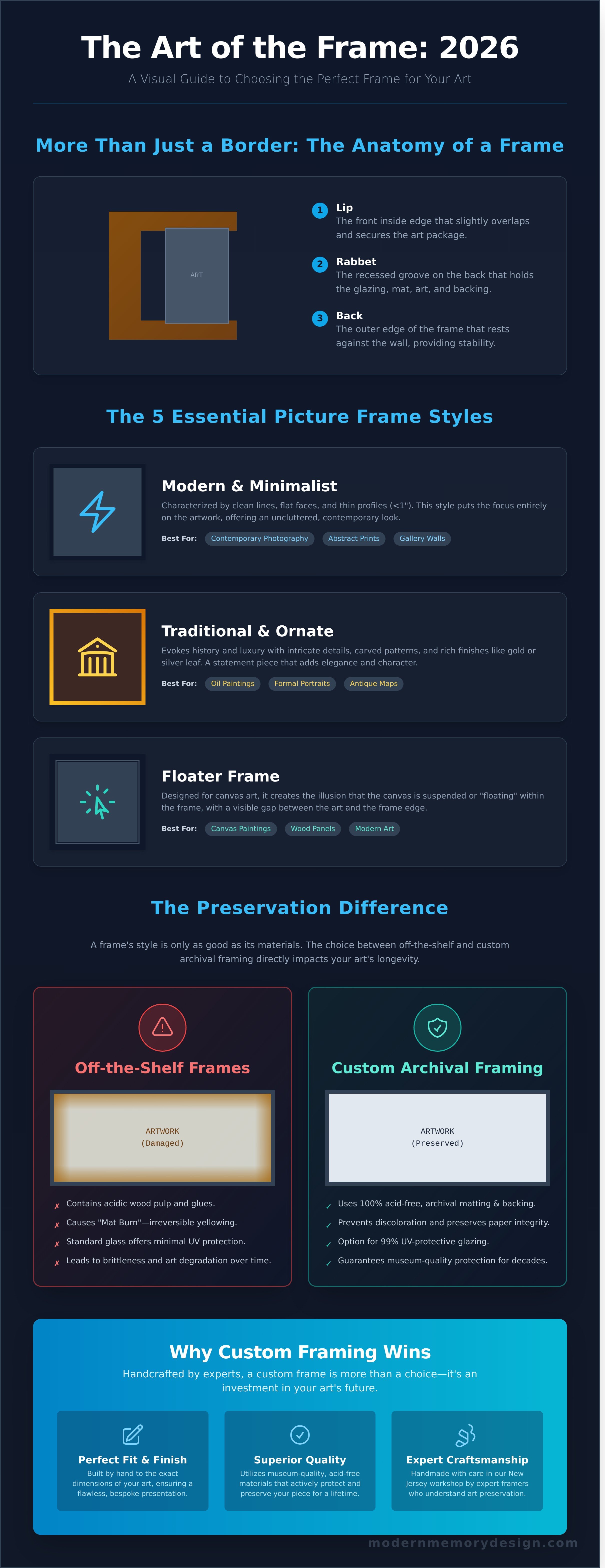
Choosing a frame is about much more than finding a border that matches your couch. The best picture frame styles are a thoughtful combination of profile shape, material, and finish, all working together to serve a dual purpose: to enhance the artwork aesthetically and to preserve it physically for decades. Before diving into specific styles, it’s helpful to understand the fundamentals. A basic question like What is a picture frame? reveals its long history as both a protective enclosure and a decorative object. This history shows a clear evolution, from the heavy, gilded gold leaf frames of the Victorian era, designed to signal wealth, to the clean, minimalist lines of modern Scandinavian design that prioritize the art itself.
But the "style" isn't just the molding. It's a complete system. The matting, the type of glass or acrylic glazing, and the mounting method are all critical components that define the final look and feel. A simple black wood frame can feel dramatically different with a wide, 8-ply archival mat versus being "floated" on a linen backing with no mat at all. Every choice contributes to the overall presentation and protection of your piece.
A frame profile is the cross-section shape of the molding. This shape dictates how the frame interacts with the art and the wall. Understanding its basic parts demystifies the selection process:
The width and depth of the molding create the frame's visual weight. A thin, 1/2-inch profile on a large canvas can feel delicate and modern, while a 3-inch wide, ornate profile adds a sense of importance and tradition.
The difference between a decorative, mass-produced frame and a professional custom frame often comes down to one word: materials. Many off-the-shelf frames use wood pulp or paper-based backing and mat boards containing acid. Over just a few years, this acid can leach into your artwork, causing irreversible yellowing and brittleness known as "mat burn."
In contrast, professional custom framing prioritizes archival-grade, 100% acid-free materials. From the mat board to the foam core backing, every component is chosen to protect, not harm, your art. This commitment to preservation is at the core of the Modern Memory Design philosophy. Our expert framers, working from our NJ frame shop, build every frame by hand using museum-quality materials. This ensures that the style you choose not only looks beautiful today but also acts as a guardian for your memory or masterpiece for a lifetime. Quality craftsmanship is the foundation of true, lasting style.
Choosing the right frame is a critical final step in presenting your art. It’s not just a border; it’s an extension of the artwork itself. The Metropolitan Museum of Art highlights the artistic significance of frames, noting how they have historically complemented and enhanced paintings. As we look toward 2026, certain designs continue to define home decor. Understanding these essential picture frame styles will empower you to make an expert choice for your space.
Characterized by clean lines, flat faces, and ultra-thin profiles often under 1-inch wide, these frames put the focus squarely on the art. Their strength is their simplicity. You’ll typically find them in neutral, monochromatic finishes like matte black, crisp white, or brushed silver. This versatile style is the go-to for contemporary photography and abstract prints, creating a cohesive, uncluttered look. It’s why over 80% of modern art galleries prefer this style. They are the foundation of any great gallery wall, where the arrangement, not the frames, makes the statement.
These frames evoke a sense of history and luxury. Think intricate, hand-carved details, scalloped edges, and rich finishes like gold or silver leafing. An ornate frame is a statement piece in itself, perfectly suited for classical oil paintings, formal family portraits, or antique maps. But don't feel limited to traditional interiors. Placing an ornate, vintage-style frame in a modern room creates a compelling "transitional" look, adding a layer of unexpected elegance and character.
Specifically designed for canvas art, the floating frame is a modern masterpiece. It creates the illusion that your canvas is suspended within the frame, with a 1/4-inch to 1/2-inch gap revealing the artwork's painted edges. This is essential for gallery-wrapped canvases where the art continues around the side. For three-dimensional objects, the deep-set shadow box is the solution. It provides the necessary depth to display treasured items like medals, concert tickets, or signed sports jerseys, protecting them behind UV-filtering glass.
Embracing natural imperfections, rustic frames are all about texture and warmth. Often crafted from reclaimed or distressed wood, they feature visible wood grain, knots, and a weathered finish. These frames are perfect for creating a cozy, lived-in atmosphere. They beautifully complement landscape photography, botanical prints, and candid family photos, fitting seamlessly into farmhouse, coastal, or eclectic decor schemes.
A cousin to minimalism, the Scandinavian style offers simplicity with a touch of organic warmth. These frames are defined by their use of light-colored, natural woods like oak, maple, or ash. The profiles are simple and clean, but the natural wood grain prevents them from feeling cold or sterile. This style is ideal for art with natural themes, black-and-white photography, or any piece that benefits from a bright, airy, and natural presentation.
So, should you choose a trending style or a timeless classic? A sleek, minimalist frame is a safe, timeless bet that will likely never look dated. An ornate or highly stylized rustic frame, while beautiful, is more tied to specific decor trends. The best approach is to first consider the artwork itself, then your personal style. Ultimately, the right frame is one that you'll love for years to come. If you're ready to find the perfect match, you can explore our handmade frame collections to see these styles up close.
The material of your frame does more than just hold the glass in place; it defines the artwork's character and ensures its longevity. Your choice between solid wood and sleek metal directly impacts the piece's durability, aesthetic, and emotional resonance. At our New Jersey workshop, we've spent over a decade working with both materials, and we understand that each offers distinct advantages. The material you choose is one of the most significant decisions you'll make, fundamentally shaping the final look and feel of your displayed art.
Solid wood is the gold standard for custom framing for a reason. It offers a warmth and organic texture that metal can't replicate, making it our preferred material for fine art, family portraits, and gallery-quality pieces. We exclusively use American-sourced hardwood moldings because their structural integrity is unmatched. Unlike imported woods that can warp in as little as 3-5 years due to inconsistent curing, our domestic woods are properly kiln-dried to a moisture content of 6-8%, ensuring they remain straight and true for decades. Solid wood frames can also be sanded and refinished to repair damage or update their look, a flexibility you won't find in composite or plastic alternatives.
Our expert framers work with several premium hardwoods:
While wood offers classic warmth, metal frames provide a sharp, contemporary edge. Aluminum is the perfect choice for specific applications where strength and a minimal profile are essential. For large-format posters or prints exceeding 40 inches, the rigidity of an aluminum frame prevents bowing and maintains tension across the piece. A slim, 1/4-inch aluminum profile can securely support a 48x72 inch acrylic-mounted photograph weighing over 20 pounds. This strength also makes metal frames a practical solution for high-traffic commercial spaces and offices, where they can withstand bumps and cleaning without showing wear.
The aesthetic difference is palpable. A brushed aluminum frame feels cool to the touch and reflects light, creating a clean, industrial vibe that complements modern photography and graphic art. Wood, in contrast, absorbs light and feels warm, lending a natural, grounded feel to a room. The choice between these different picture frame styles often comes down to the environment and the story the artwork is meant to tell.
Choosing the right frame is more than just a finishing touch; it’s a critical decision that enhances your artwork and integrates it into your home. The most common question our expert framers hear is, "Will this actually look good on my wall?" The answer is always yes, provided you match the frame to the art, not just the room. A common mistake is overpowering a clean, modern photograph with a heavy, ornate Rococo frame; the two styles compete instead of complementing. This practical guide will help you select the perfect frame with confidence.
For standard 8x10 or 16x20 photographs and prints, the Gallery style is a professional-grade choice. Its clean, simple lines don't distract from the image, making it the industry standard for artists and galleries. For digital photography, using a crisp, white mat is essential. A 2 to 3-inch acid-free mat creates vital breathing room, drawing the viewer's eye inward to the photo itself. One of our top tips for framing a photo to achieve a high-end look is to use an oversized mat; it adds a sense of importance and sophistication to any print.
Your achievements deserve a presentation that reflects their significance. This is why custom diploma framing typically leans toward Traditional or Classic styles. A polished mahogany or a timeless black wood frame communicates professionalism and prestige. To personalize the piece, consider using a double mat featuring your school's colors, such as a navy blue top mat over a gold liner. Most importantly, always opt for UV-protective glass, which blocks up to 99% of harmful ultraviolet rays to prevent fading and preserve the document's integrity for decades.
Creating a gallery wall with a mix of wood, metal, and ornate frames can look curated, not chaotic. The key is to establish a unifying element. Start with the "Anchor Frame" technique: choose your largest or most visually dominant piece and hang it first. This piece sets the tone for the entire arrangement. To harmonize disparate picture frame styles, use a consistent mat color, like a single shade of off-white, across every piece. This creates a cohesive visual thread that ties the collection together. Maintaining a consistent spacing of 2-3 inches between each frame also ensures the final layout feels balanced and intentional.
By focusing on the relationship between the art and its border, you can move from uncertainty to a clear, confident choice. The right frame doesn't just hang on a wall; it elevates the art it holds. Feeling inspired? Explore our collection of handmade custom picture frames and find the perfect match for your art today.
Choosing the right frame is the final, critical step in celebrating your artwork. While off-the-shelf frames from big-box stores offer a quick fix, they often fall short in quality, fit, and long-term protection. A generic 8x10 frame rarely fits an 8x10 piece perfectly. At Modern Memory Design, we close that gap. Every frame is a custom piece, built by hand in our New Jersey workshop to honor your specific artwork.
Our process combines old-world craftsmanship with modern convenience. You get a perfect fit, archival materials, and expert guidance without compromise. This isn't just a frame; it's a permanent home for your memory, built to last a lifetime.
Every order is "Handmade for You" in our Hasbrouck Heights workshop. Our expert framers use museum-quality, acid-free mats to prevent discoloration and UV-protective acrylic that blocks 99% of harmful rays. This commitment to quality ensures your art remains vibrant for decades. For local clients in NJ, NYC, and CT, we also offer a professional picture hanging service to guarantee a flawless installation.
Making the right choice from all the available picture frame styles can feel overwhelming. Our powerful online custom frame tool simplifies everything. Just upload an image of your art, enter its exact dimensions, and start designing. You can instantly visualize how different frame profiles, mat colors, and widths will look with your piece. The preview updates in real-time, giving you complete creative control and transparent pricing before you commit.
Before you finalize your design, run through this quick checklist to ensure a perfect result:
Have a digital photo you love? Our all-in-one Print & Frame service is the ideal solution. Simply upload your file, and we’ll handle the professional, archival-quality printing and custom framing. Most custom framing orders are completed and shipped in just 4-6 business days, arriving at your door ready to hang. Let's create something beautiful together. Shop our full collection of frame styles today!
Navigating the world of home decor doesn't have to be complex, especially as we look toward 2026. You're now equipped with the essential knowledge of the 5 foundational frame types and a clear understanding of how materials like wood and metal can transform your artwork. Choosing the right frame is the final, critical step that elevates a simple image into a centerpiece for your home.
When you're ready to select from the best picture frame styles and create a piece that truly reflects your taste, our team is here to help. Every single frame we build is handmade with meticulous care in our Bergen County, New Jersey workshop. We use only museum-quality archival materials to ensure your memories are preserved for a lifetime, not just a few years. Plus, with free shipping on 100% of our orders, getting this level of professional quality delivered to your door has never been easier.
Ready to create a piece that's uniquely yours? Design Your Custom Frame Today and let our expert artisans bring your vision to life.
Looking ahead to 2026, we project three dominant trends in custom framing. Natural wood finishes like light oak and walnut are expected to make up 45% of orders, suiting organic and biophilic interior design. Sleek, thin-profile metal frames in matte black and brushed brass will remain a top choice for modern art, accounting for about 30% of sales. We also anticipate a 15% rise in ornate, "Gilded Art Deco" frames for adding a touch of classic luxury.
For a cohesive gallery wall, the best practice is to select a single frame color or material to unify the collection. Using all-black gallery frames or all-white wood frames creates a clean, museum-quality look that lets the artwork shine; over 80% of designers prefer this method for formal spaces. For a more eclectic style, you can mix different frames, but maintain a consistent element like the mat color to tie the pieces together visually.
A gallery frame is defined by its clean, simple profile and is almost always paired with a wide, acid-free mat. The frame itself is typically 0.75 to 1.25 inches wide, designed to give the artwork a professional presentation without distraction. Standard frames encompass a huge variety of styles, from ornate and rustic to decorative, and may have narrow mats or no mat at all. A gallery frame’s purpose is to elevate the art, while a standard frame is often a decorative piece itself.
A floating frame is specifically designed to display stretched canvas art. The artwork is mounted from behind, creating a 1/4-inch gap between the canvas edge and the frame, which gives it a unique "floating" effect. This style beautifully showcases the painted or printed edges of the canvas. For artwork on paper, we always recommend a traditional frame with a mat and UV-protective glazing to protect it from dust, humidity, and fading.
The frame should always complement the artwork first and the room decor second. We advise clients to follow an 80/20 principle: 80% of the decision should be based on the art's colors, subject, and era, while 20% can be influenced by the room's style. For example, a warm-toned oil painting looks outstanding in a gold-leaf frame. That frame can then connect to your decor if the room has other brass or gold accents.
The industry standard for a professional diploma is a classic wood frame with a double mat to create a distinguished, archival display. We recommend a high-quality wood like cherry or mahogany with a profile width of 1.25 to 2 inches. A double mat using your institution's official colors, such as a navy outer mat with a gold inner reveal, adds a professional, customized finish that protects and honors your achievement for decades.
Neither material is inherently better; the right choice depends entirely on the art and the room's aesthetic. Wood frames provide a classic warmth and are ideal for traditional paintings, portraits, and fine art photography. Metal frames, typically made of aluminum, offer a sleek, contemporary look that works perfectly for modern posters, graphic prints, and black-and-white photos. Both can be handcrafted to museum-quality standards, so the choice is about style, not quality.
Yes, you can absolutely mix different picture frame styles to create a space that feels curated and personal. The key to making it look intentional is to establish a unifying element. For example, you can group frames of different materials and eras if they all contain black-and-white photography. Alternatively, you can maintain a consistent color palette across various picture frame styles, like mixing ornate and modern frames that are all finished in gold.
{"one"=>"Select 2 or 3 items to compare", "other"=>"{{ count }} of 3 items selected"}